Why your creative approval process costs you winning ads

Imagine this approval round: an ad reaches its third revision because the headline grey differs from the brand manual. Two weeks later it goes live. After three days, the first numbers look weak. This fictional example illustrates lost testing time, not a fixed deadline for a reliable decision.
During those two weeks, you spent design time without starting a new test. Include that delay when assessing the approval process.
Your creative has a different job than looking good
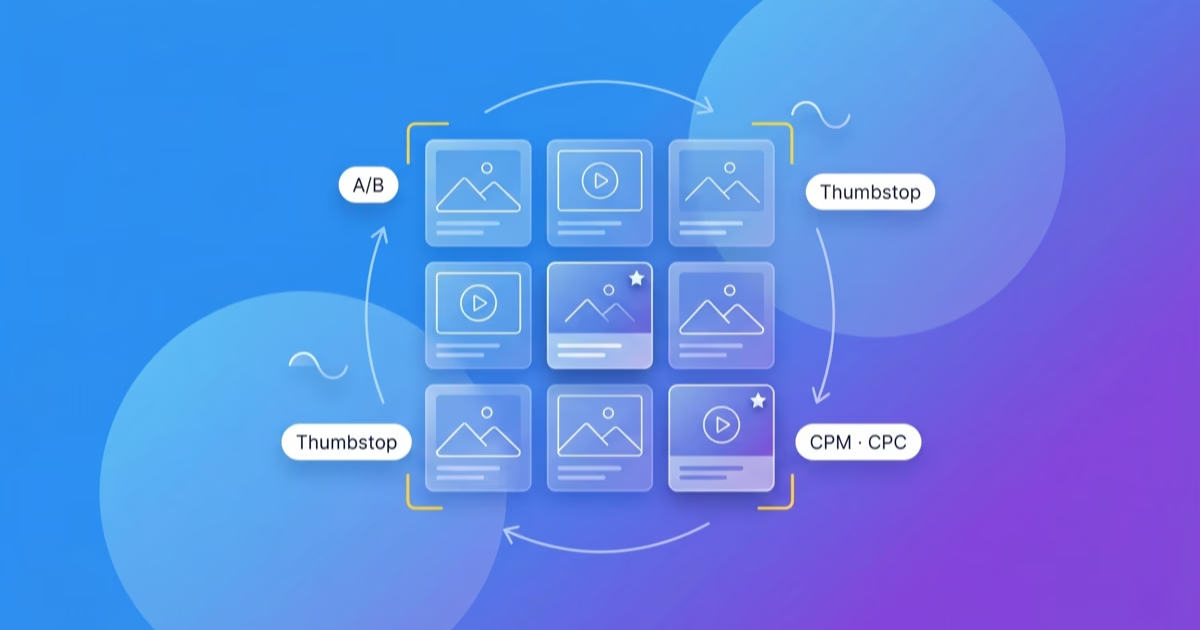
At approval, check what the creative is meant to do: earn attention, explain the product and give a clear reason to buy. After launch, measure whether it brings clicks and purchases at acceptable costs.
That settles what belongs in an approval: the question of effect. Does the hook stop the thumb in the first seconds. Is the product visible. Is there a message in the frame you can grasp mid-scroll. Those are answerable questions, and they have little to do with taste.
In many approvals the ad still gets judged as if it were hanging in a gallery.
Recognition comes from repetition
Recognition is a brand goal. Imagine the contact in the feed: your ad appears between two videos from friends and someone sees it for three seconds. The message needs to make sense in that brief moment.
The same person, voice and recurring design can connect your ads. Recognition after the fifth video is not a fixed rule. Assess recognition and economic impact separately.
Cold traffic and retargeting need different creatives
In cold traffic, the ad must make sense to someone who does not know your brand. Test different openings and production styles. A phone video is an option, not a universal winner against studio production.
In retargeting, build on the earlier contact: familiar colours, the same product and the tone from your store. Brand presentation remains a requirement whose effect you still need to test.
What a high hit rate actually tells you
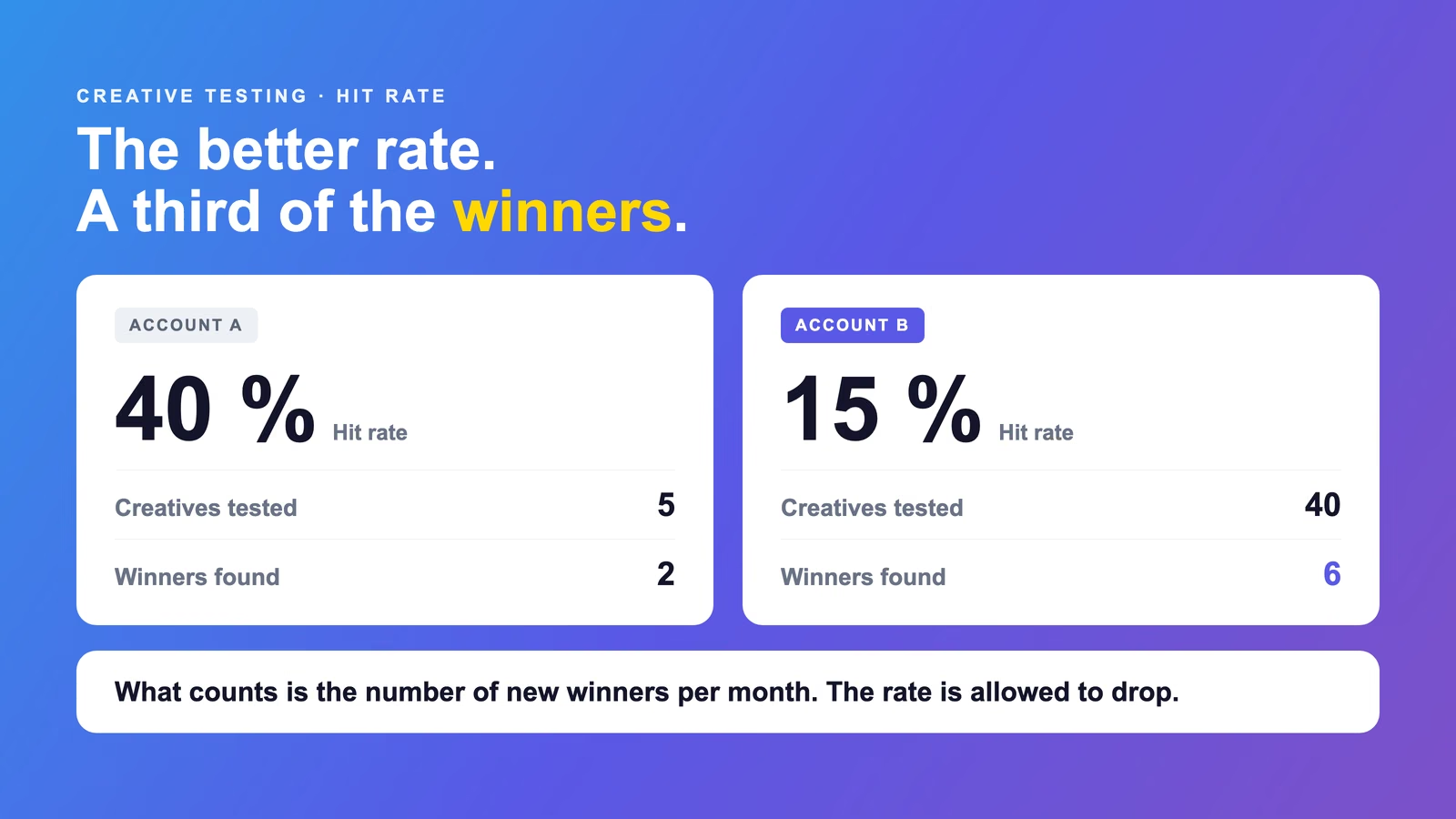
The creative hit rate is the share of newly tested ads that turn into winners. If you test 20 creatives and 3 of them beat your target CPA, your hit rate is 15%.
Let's run it through two accounts.
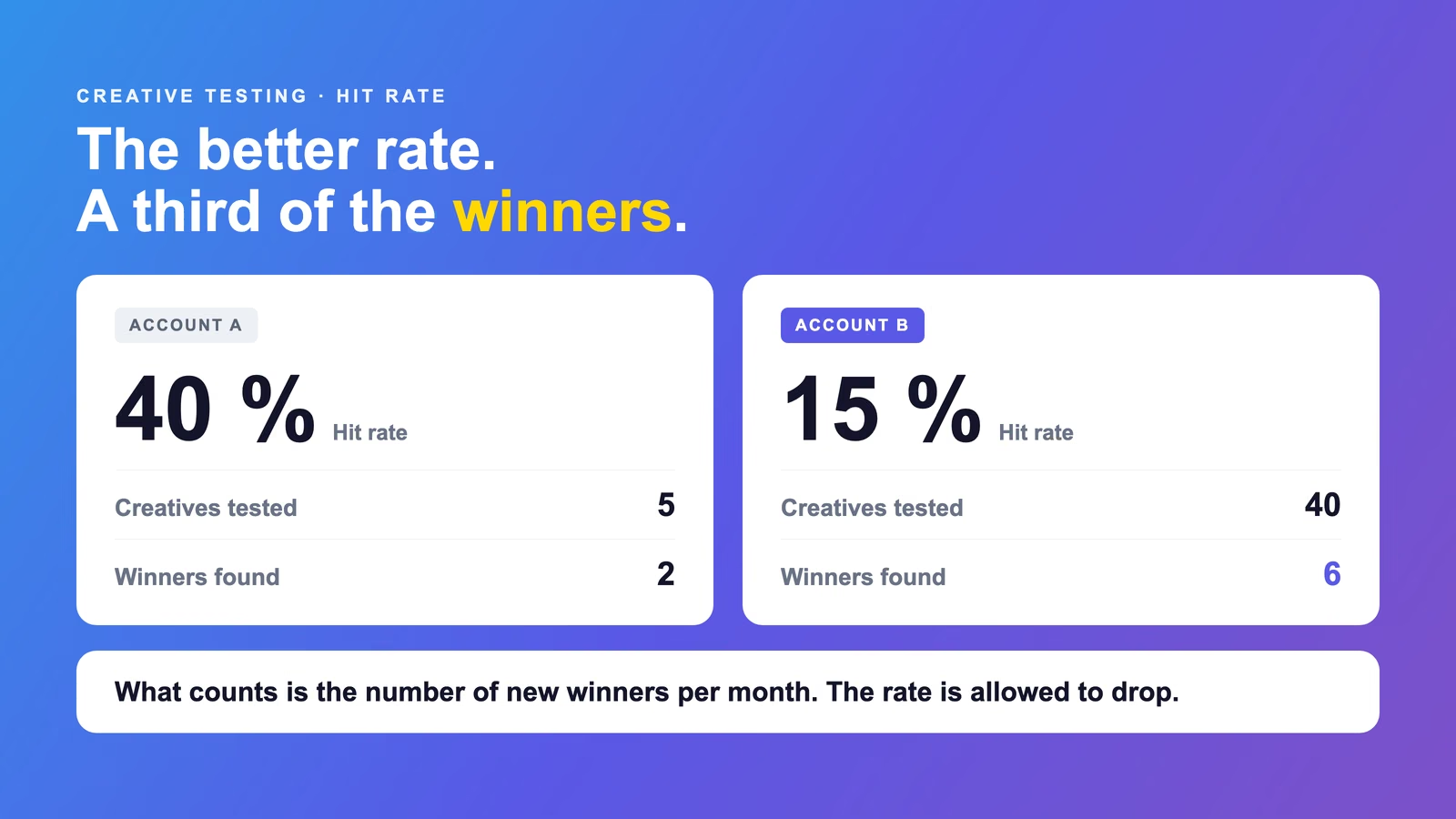
- Account A tests 5 new creatives a month and finds 2 winners. Hit rate: 40%.
- Account B tests 40 new creatives a month and finds 6 winners. Hit rate: 15%.
Account A has an almost three times better rate. Account B has three times as many winners. Neither tells you how much spend those winners can support or what next month’s revenue will be.
A rate above 10% is not universal evidence that a team tests too cautiously. Look at the concepts behind it: are they only variations of existing ads, or do they explore new reasons to buy? The rate alone cannot answer that.
The number that counts is the absolute count of new winners per month. The rate is allowed to drop. How to set up the cadence behind it, how many concepts per week make sense and which metrics to read, we wrote up in our creative testing framework.
What this means for your approval process
Scrapping approvals would be the wrong conclusion. The point is what gets checked, and how long it takes.
These belong on the list:
- Hook: enough happens in the first seconds to stop the thumb
- Product: the product is in the frame, recognisable and large enough
- Message and CTA: both sit in the creative itself, readable without the ad copy
- Format: aspect ratio and safe zones match the placement
Set brand requirements before production. At approval, check specific deviations and the intended message, rather than reopening the moodboard discussion for every variation.
On top of that, approvals need a time window. What doesn't clear today won't get tested this week. An account meant to push 40 creatives a month can't absorb a two-week loop.
Approval before a creative gets budget
A creative is not ready when the export is done. Before launch, brand, client and performance team need one clear decision. For paid-creative approval we use nod.: feedback sits on the frame, reviewers need no account, and every Meta placement is visible before spend starts.
Frequently asked questions
What is the creative hit rate?
The creative hit rate is the share of newly tested ads that turn into winners. With 20 tests and 3 winners it sits at 15%. What counts as a winner is something you define upfront, usually against your target CPA or your account's break-even ROAS.
Is a high hit rate good?
Not automatically. A 40% rate across 5 tests gives you 2 winners, a 15% rate across 40 tests gives you 6. A rate above 10% does not assess concept variety or the spend those winners can support. Read the rate alongside test volume and economic results.
Does a creative have to be on brand?
Yes, brand requirements apply to performance creatives too. Define what is mandatory before production. Whether a phone video or studio production performs better is a test question. In retargeting, the earlier contact can give the message useful context.
How long should a creative approval take?
Short enough that it doesn't slow the testing cadence. What doesn't clear today won't get tested this week. An account meant to push 40 creatives a month can't absorb a two-week loop. What gets checked is the hook, product visibility, message with CTA and the format, not colour values or moodboard fidelity.
Ten creatives need tests you can evaluate
Ten creatives offer ten test opportunities if each gets enough budget and a clear question. One creative still in approval produces no measurement. More files alone do not make a better test.
Want to know how many winners your account actually produces per month, and where your approval process is costing you volume? Let's talk for 15 minutes. In a first call we'll look at where your biggest lever is.
How we shorten the process
The senior who runs the account decides which asset goes live. That is part of the work as a Meta ads agency and of the creative production in the same team.
How many ads a week you need for that is worked out in the creative testing framework.











Klären wir deinen nächsten Schritt zusammen
Let’s work out your next step together