Black Friday 2026: Your paid social plan for the store

Before Black Friday, decide which offer your margin can support, which creatives to test, and what your stock and store can deliver. Then set the budget.
If planning starts in discount week, creative, approvals and campaigns all need your attention at once. Make those decisions earlier. This roadmap helps you do that.
For your store, that means checking the margin, testing material early and setting what you can spend per order.
Clarify the goal first, then the discount
A high revenue target is not enough. Black Friday can win new customers, activate stock, clear the warehouse or secure cash flow before year-end. Each of those decisions needs a different offer and a different profit limit.
Before planning, answer four questions:
- Should Black Friday buy new customers or convert existing demand?
- Which products have enough margin and stock for more volume?
- How far can cost per order rise before the promotion only shifts revenue?
- What happens after the sale with the newly won customers?
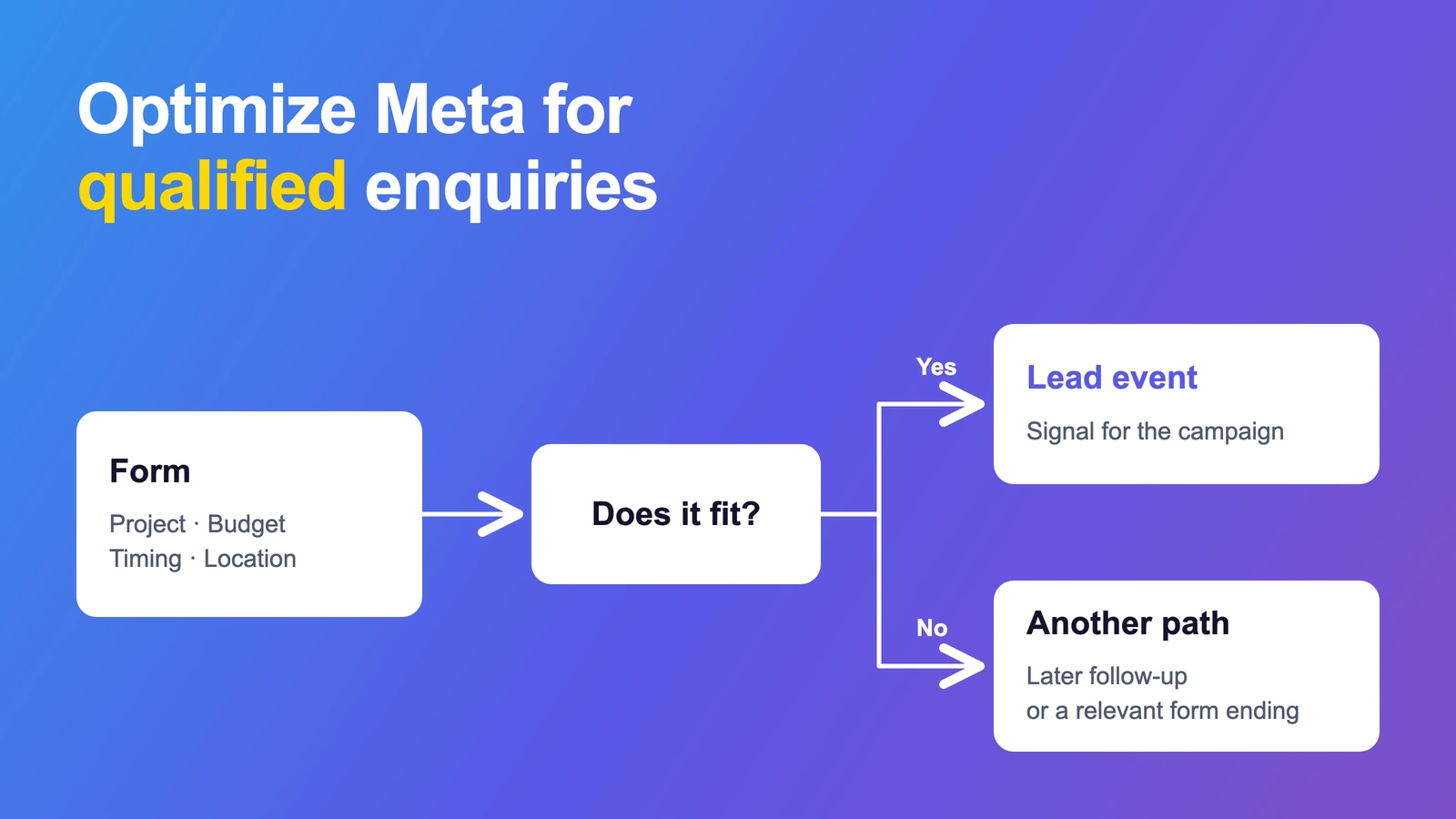
Without those answers, a discount becomes the default solution. Check whether the offer, message and store fit together, and what remains after costs.
Eight to ten weeks out: build the offer and the calculation
The best Black Friday offer is not necessarily the biggest discount. It needs to be clear to the customer and fit your margin. Five options, each with its own risk:
- Percentage discount: fits when margin is stable and the benefit is understood instantly. Risk: you damage the price expectation for the rest of the year.
- Bundle: fits when you want to raise AOV and move stock. Risk: extra complexity in shop and fulfilment.
- Gift above cart value: fits when AOV and perceived value count. Risk: the gift eats the margin or runs out.
- Early access: fits when community and email list are active. Risk: without real scarcity it is just another discount.
- Stock-limited promotion: fits when one product can be a clear hero. Risk: logistics has to master stock live.
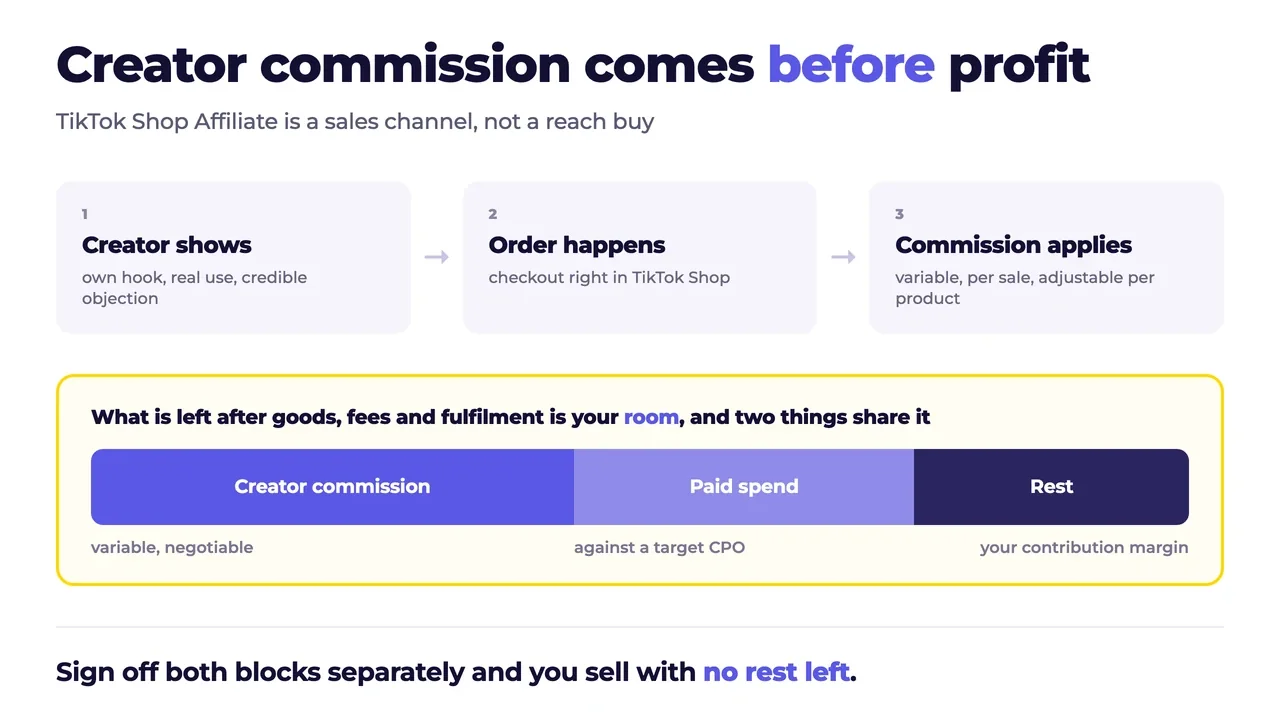
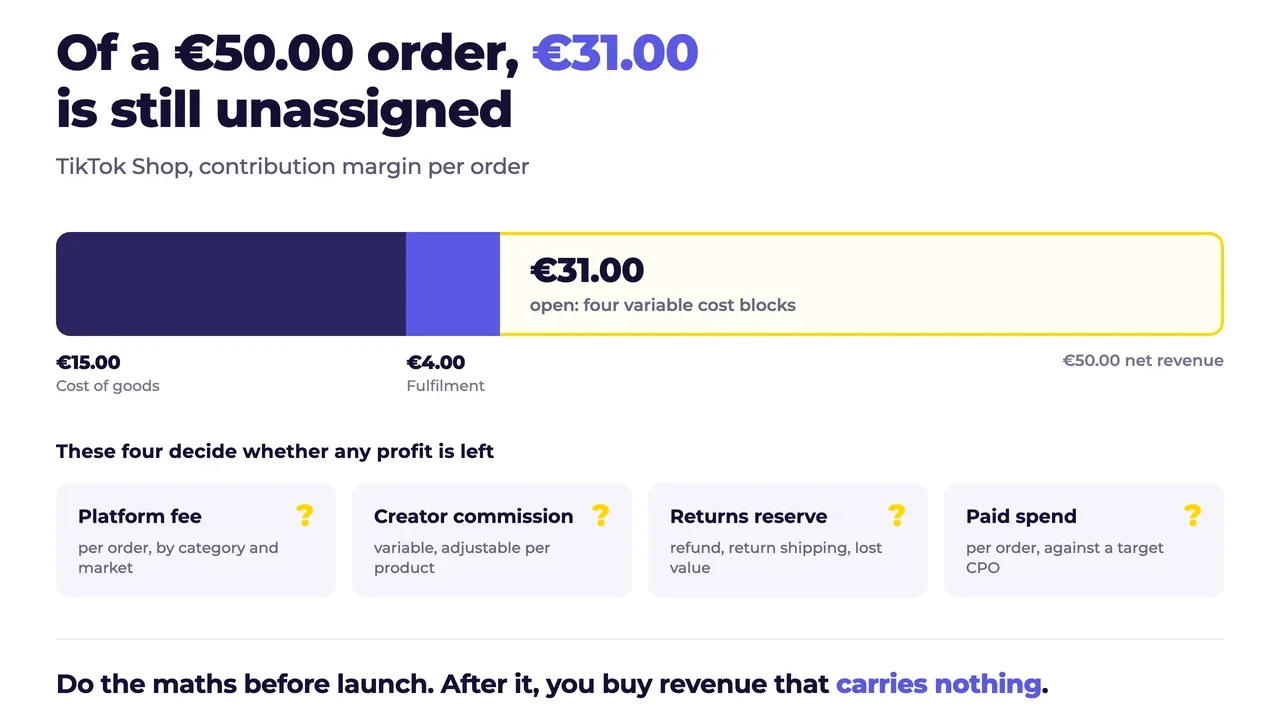
Calculate each variation with a realistic Black Friday CPO, not a quiet May weekend. The profit planner helps with planning. Include goods, discounts, payment, shipping, returns and media in the same calculation.
Six weeks out: build a creative bank, not a hero video
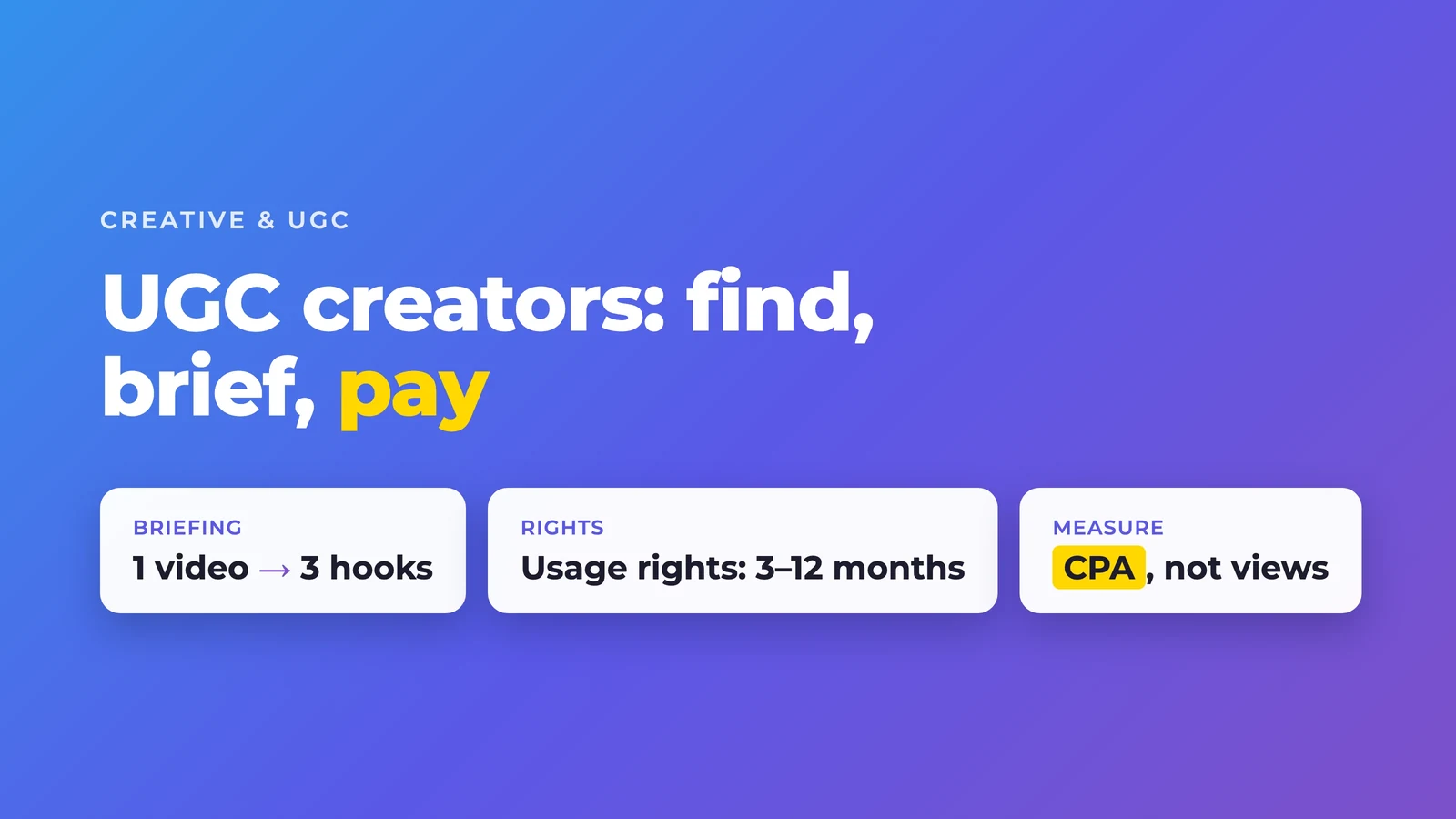
A single "20% OFF" video is not a complete creative plan for the week. Give customers reasons to buy beyond the price.
You need several creative lines that explain the same promotion from different customer situations:
- The clear deal for people who already know the brand.
- The product problem for cold audiences with no reason to wait.
- Proof: use, review, comparison or result.
- The bundle or gift as concrete added value.
- Deadline and stock, but only once they are true.
Test several hooks and variations before launch. By November, you want to know which messages your customers respond to.
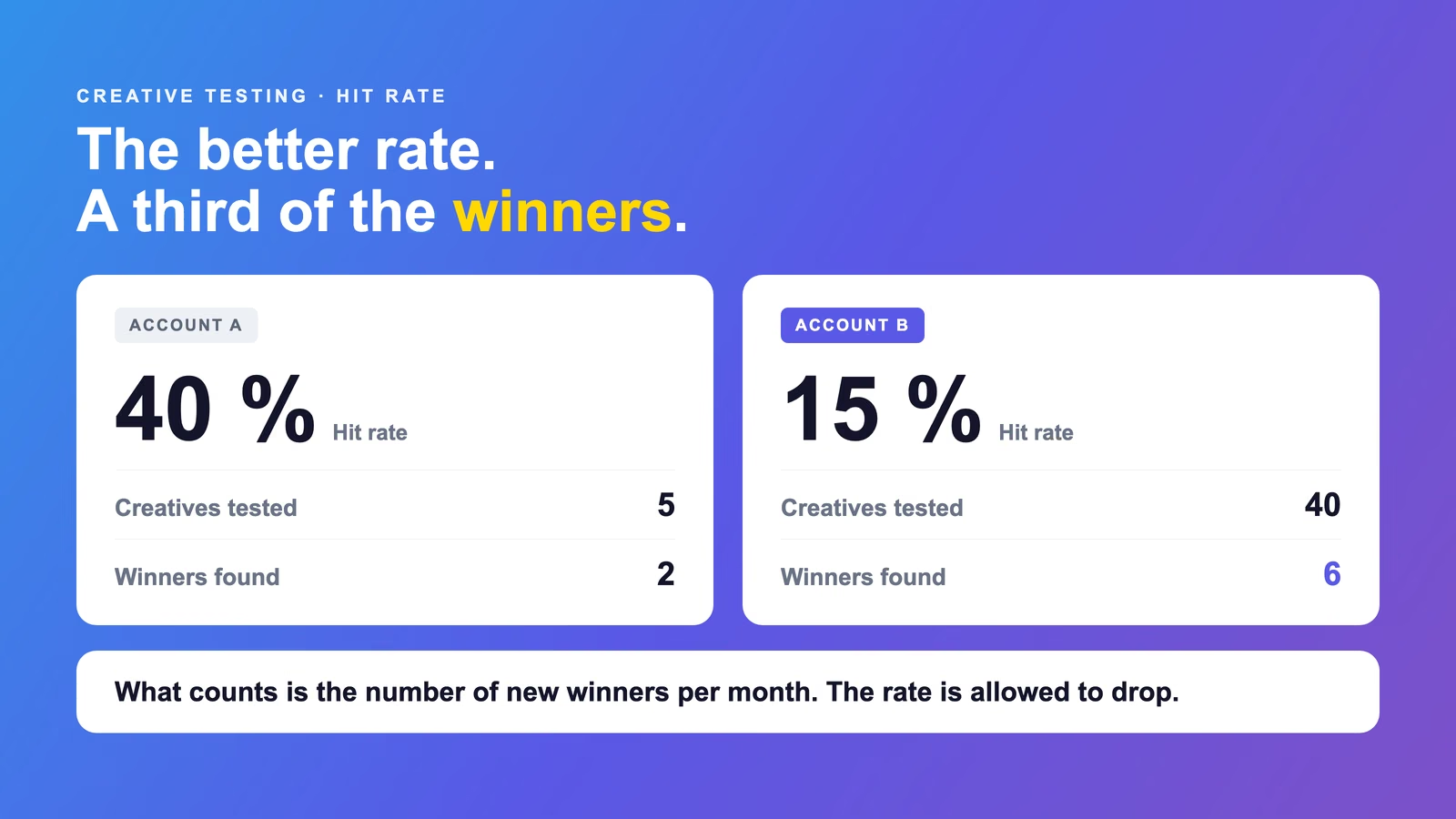
Test the core idea before Black Friday. During the sale, keep new tests focused on controlled variations. That leaves fewer unresolved questions about products and messages during launch week. The creative testing guide explains how to plan those tests.
Four weeks out: harden shop, tracking and operations
A high CTR is worth nothing if the product page, checkout or tracking break. Black Friday makes small defects visible and expensive.
- Check mobile checkout with a real test order.
- Test discount logic, bundle and gift above cart value on edge cases.
- Clarify stock and restock time for the hero products.
- Sanity-check tracking against backend revenue.
- Make return and delivery communication visible in the shop.
- Prepare customer support for the questions to expect.
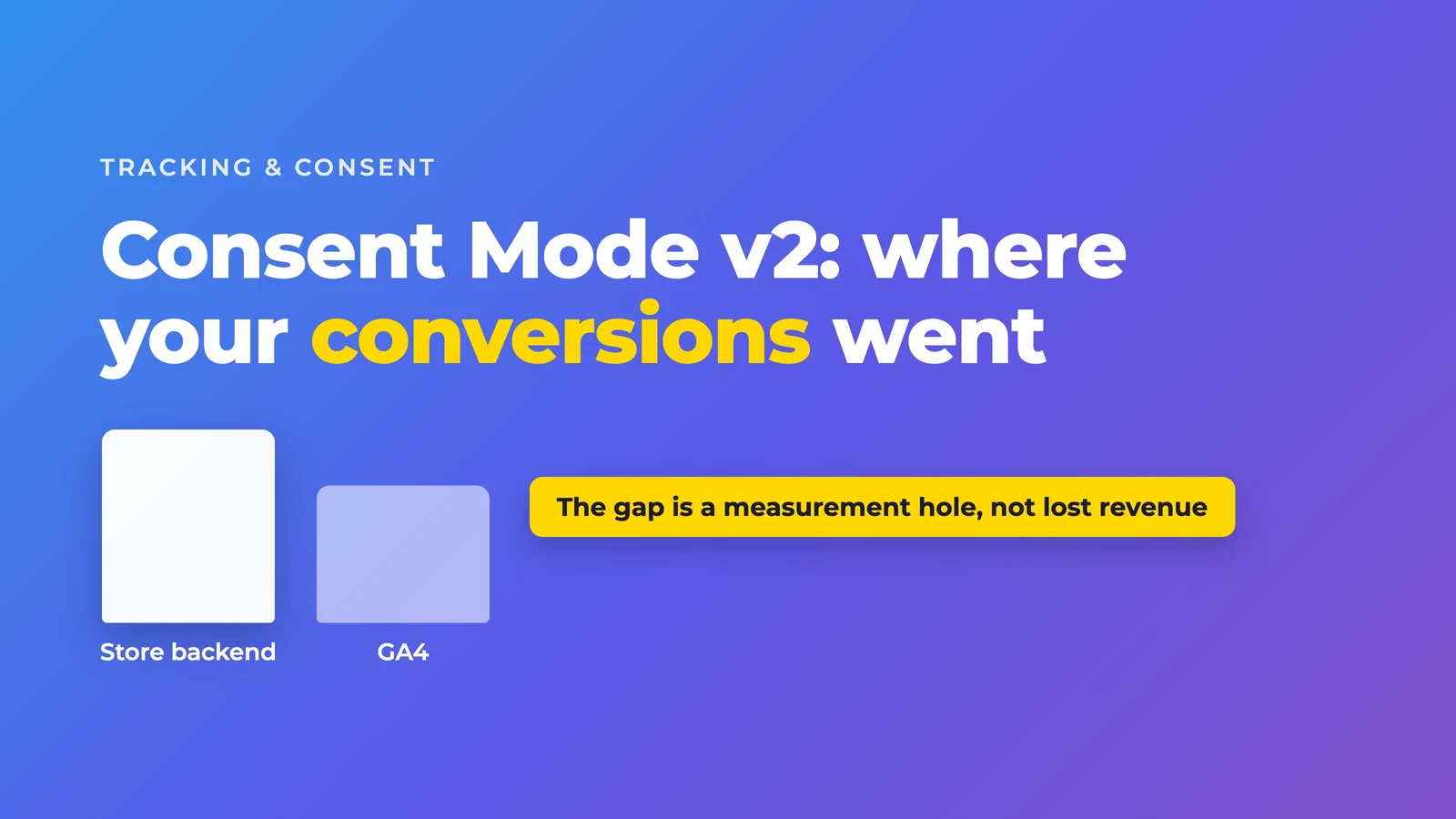
If GA4, shop backend and Ads Manager already sit far apart in normal operation, Black Friday will not fix that. Check the wiring beforehand. The Consent Mode v2 guide shows where conversions often get lost in the setup.
Two weeks out: move budget only onto proven winners
More budget changes delivery. Before Black Friday week, decide:
- Which creatives and products are the proven winners?
- Which campaigns may scale?
- At which CPO or which MER is budget frozen?
- Who decides at the weekend when a limit breaks?
Hold budget back for real opportunities. But avoid the opposite: a new setup every day because the last day ran differently. Black Friday needs pace, and pace needs rules fixed in advance, or you burn budget on reactions.
Black Friday week: steer on business signals
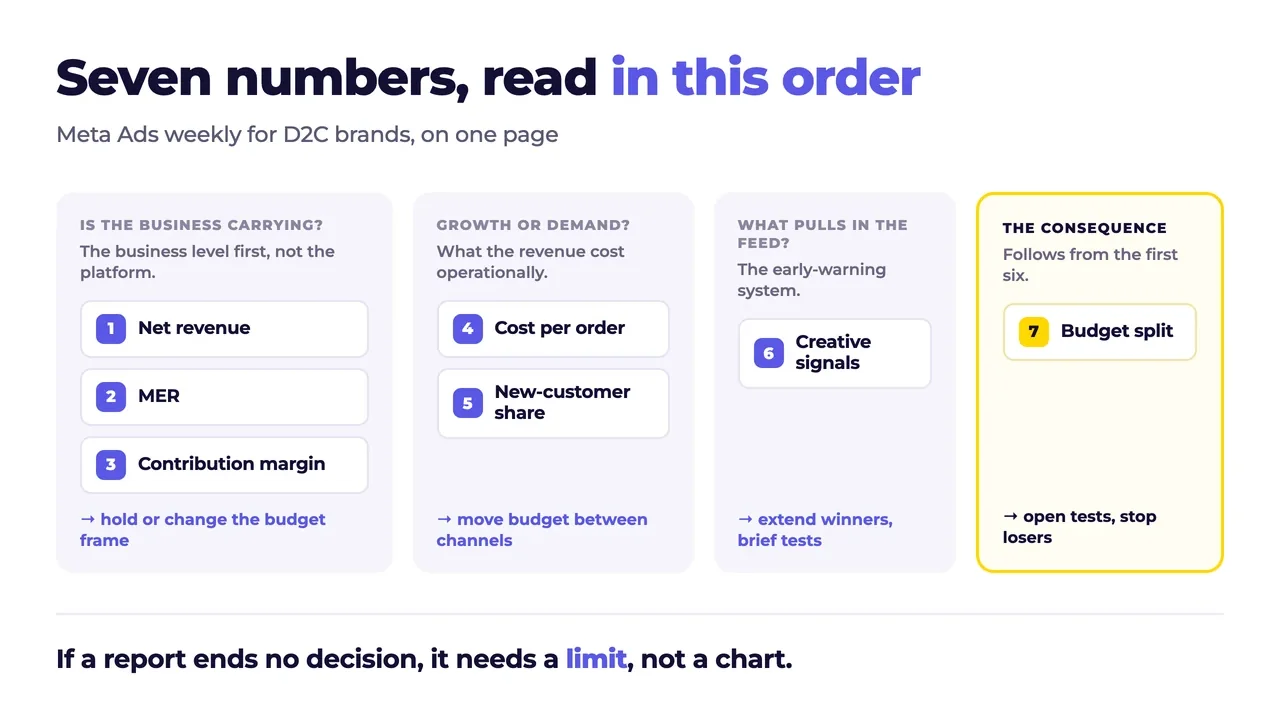
In the week itself you need short decision paths and few metrics. Six values are enough:
- Net revenue in the shop backend: shows whether the demand really reaches the business.
- CPO and contribution margin: show whether the promotion holds the planned limit.
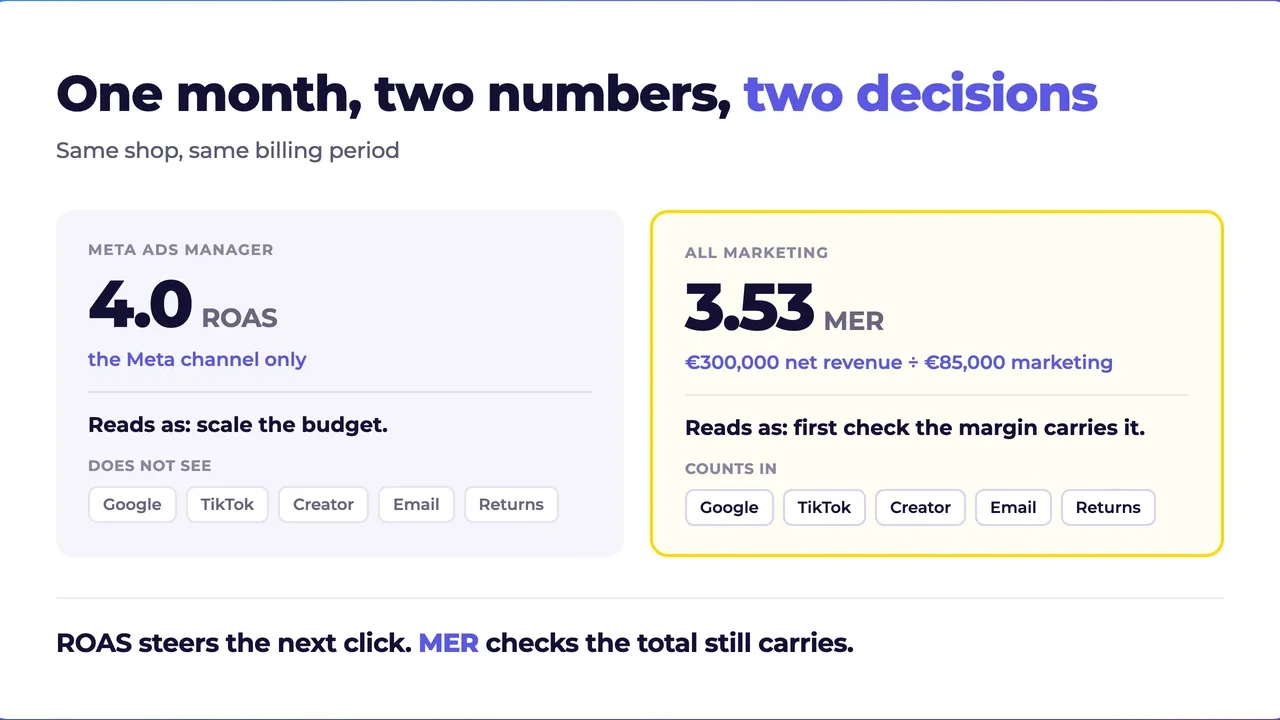
- MER over 7 days: puts channel figures in the context of the whole business.
- Stock of the hero SKUs: check before allocating more budget.
- Creative delivery: compare spend and results before assuming fatigue is the cause.
- Support and returns signals: surface wrong expectations early.
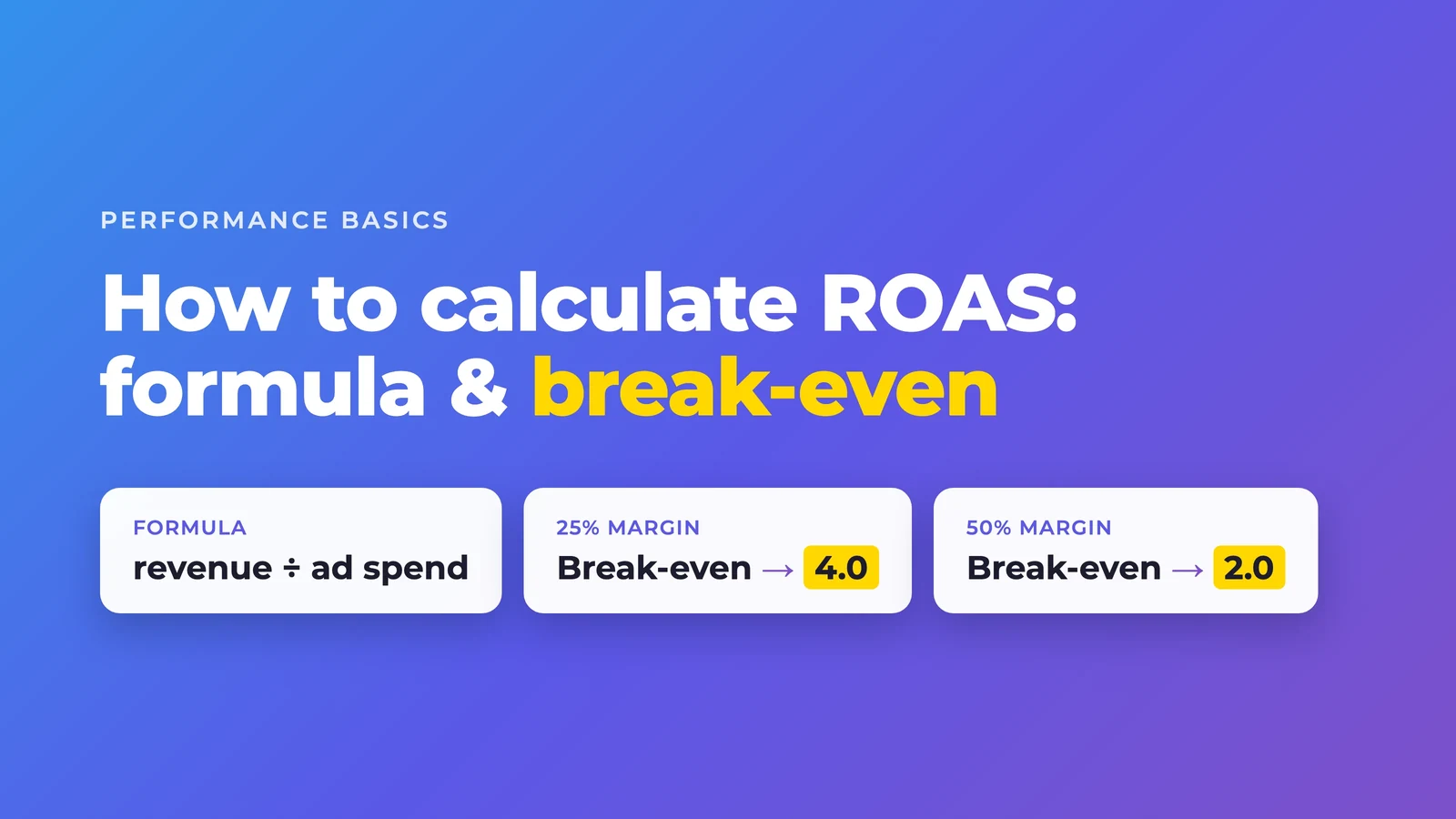
Do not switch off every creative that wobbles one morning. Do not keep running because the ROAS looks nice either. The decision has to match the profit limit fixed in advance. Which numbers belong in the weekly permanently is in the Meta Ads reporting guide.
After Cyber Monday begins the part many give away
Black Friday can bring expensively bought new customers. The profit only appears when you do not treat those customers like an anonymous order.
Plan in advance the welcome and post-purchase flows for new customers, the cross-sell that fits the product bought, the delivery communication that lowers support pressure, and a retargeting that does not simply carry the discount logic forward. Plus the analysis: which offer, which creative and which customer type brought real value?
The decisive question in the report is which revenue you want to repeat next year without having to buy the same discount again.
Your Black Friday plan on one page
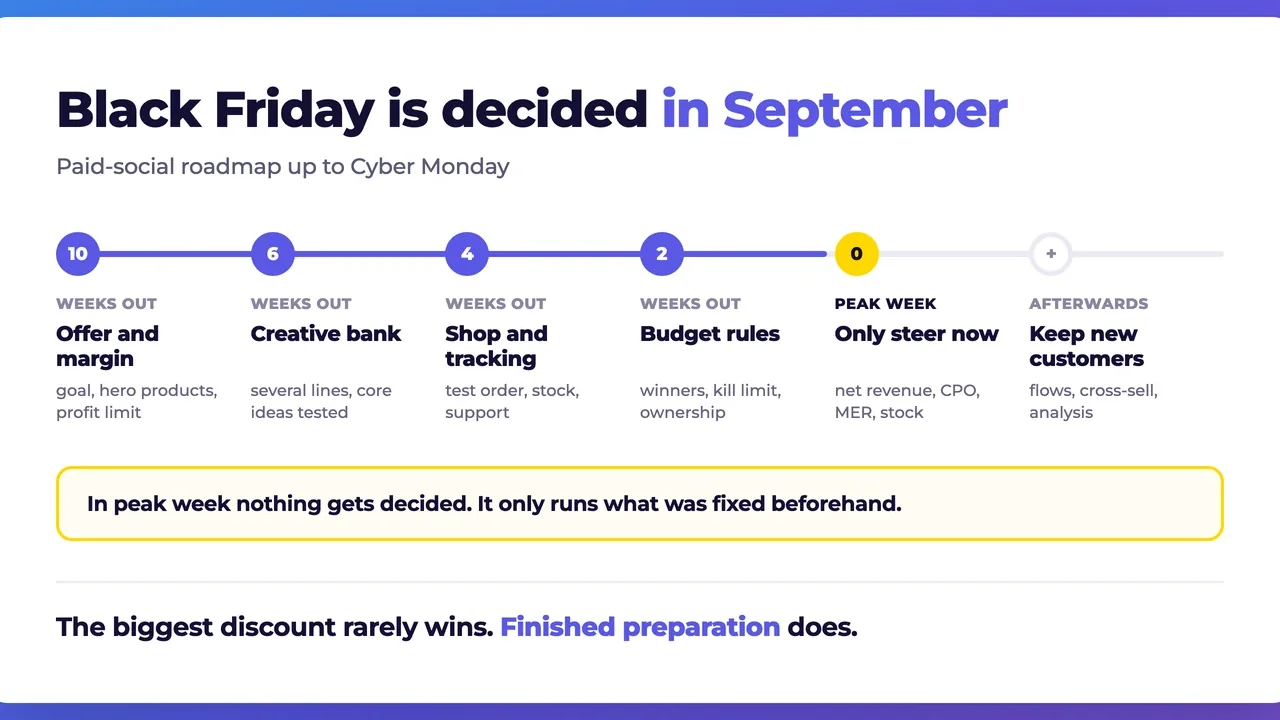
- 8 to 10 weeks out: set goal, margin, offer and hero products.
- 6 weeks out: produce the creative bank and test the core ideas.
- 4 weeks out: test shop, tracking, stock and support.
- 2 weeks out: prioritise winners, fix budget and kill rules.
- Peak week: steer daily on net revenue, CPO, MER and stock.
- Afterwards: activate new customers and evaluate the promotion on profit.
Before launch, know which offer you will run, which creatives hold up in testing, and where your economic limit sits. To work through the plan with us: Let’s talk.
Frequently asked questions about Black Friday in paid social
When should D2C brands prepare for Black Friday?
With offer and margin at least eight weeks before peak week. Creative tests and operations have to run beforehand, not during the auction.
Should I scale more aggressively on Black Friday?
Yes, if your winners, your stock and your profit limit are clear. No, if you are only reacting to a good daily ROAS.
Does every brand need a high discount?
No. A clear bundle, a gift or early access can be more economical when the perceived value is right and the margin stays protected.