Finding UGC creators: From brief to ad test

A natural-looking video is not automatically a good ad. It needs a clear reason to buy, the right person on camera and permission to test the material.
This guide covers how to find UGC creators, vet them, brief them, pay them, and judge their videos by account performance.
What Is a UGC Creator?
A UGC creator produces videos in the style of real user content that brands use as ad material. Unlike influencer marketing, the brand buys the video itself, not the reach; the brand's own ad account is what distributes it.
The difference sits in distribution. Influencers sell access to their audience, so the product runs through their channel and their community. UGC creators hand over an asset the brand targets and runs itself, through Meta, TikTok, or Google. Reach comes from ad spend, not from the creator's account. What matters in creator selection is whether the person can sell on camera. Follower count plays no part in that.
Where to Find UGC Creators and How to Spot Good Ones
Four paths lead to usable creators, each with a different ratio of effort to hit rate.
- Marketplaces: fast, with portfolios and pricing visible upfront. The best creators are rarely exclusive there, because every brand searches the same pool.
- Direct outreach: search TikTok and Instagram for creators already posting organically in your niche. More work than a marketplace, but it surfaces faces that have not run in every feed yet.
- Your own customers: someone who uses the product daily talks about it differently than someone unboxing it for the first time. A call-out through your email list or a package insert is enough to start.
- Agency rosters: vetted creators plus briefing and rights handling in one package, for a higher margin per video.
What separates a good creator before you book the first shoot: the first three seconds of their portfolio already work as a hook. They talk to camera like they are talking to a friend. They have shot for performance campaigns before and ask about results from past campaigns in the intro call. They match your audience in age and language: a German product needs German-speaking creators, and Switzerland or Austria need their own voices depending on the market.
What UGC Costs: Pricing Models, Not List Prices
Actual rates swing too much across experience, niche, and region to quote responsibly. The models behind those rates hold steady.
- Per video: the standard model. Price tracks the creator's experience, video length, and how many hook variants come out of the same shoot.
- Package deals: several videos a month at a tiered rate, worth it once you are testing on a regular cadence.
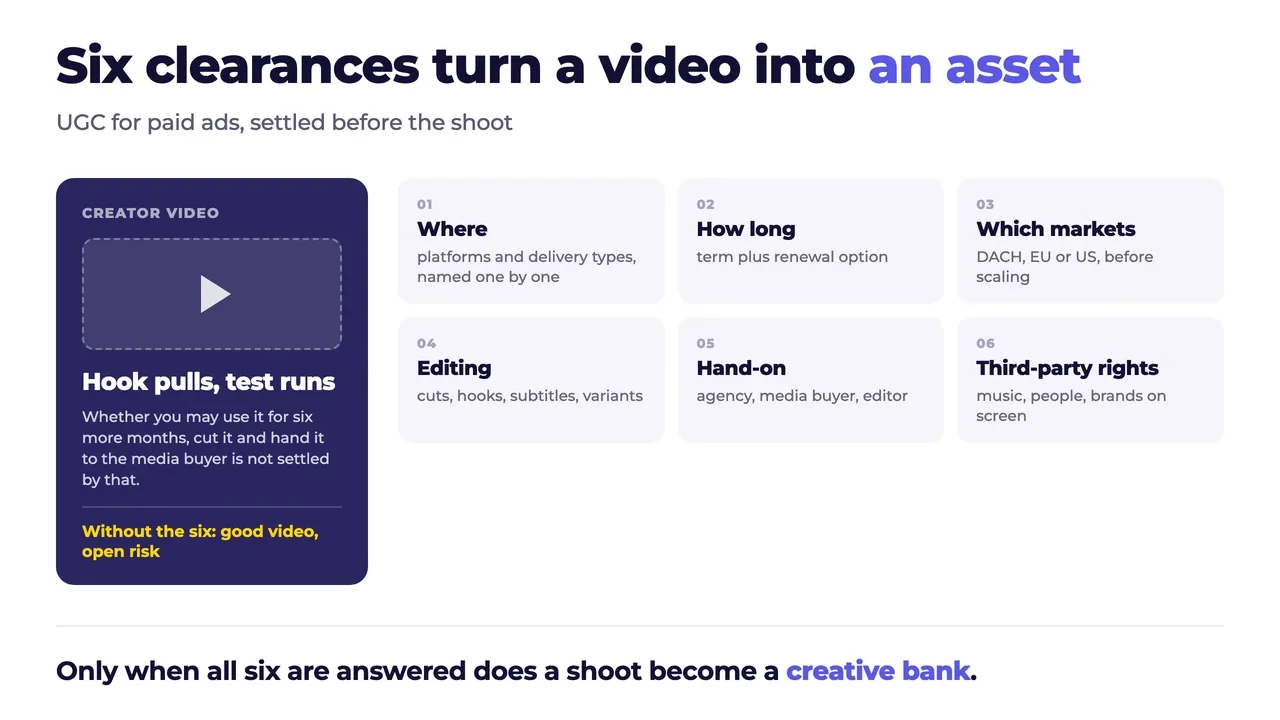
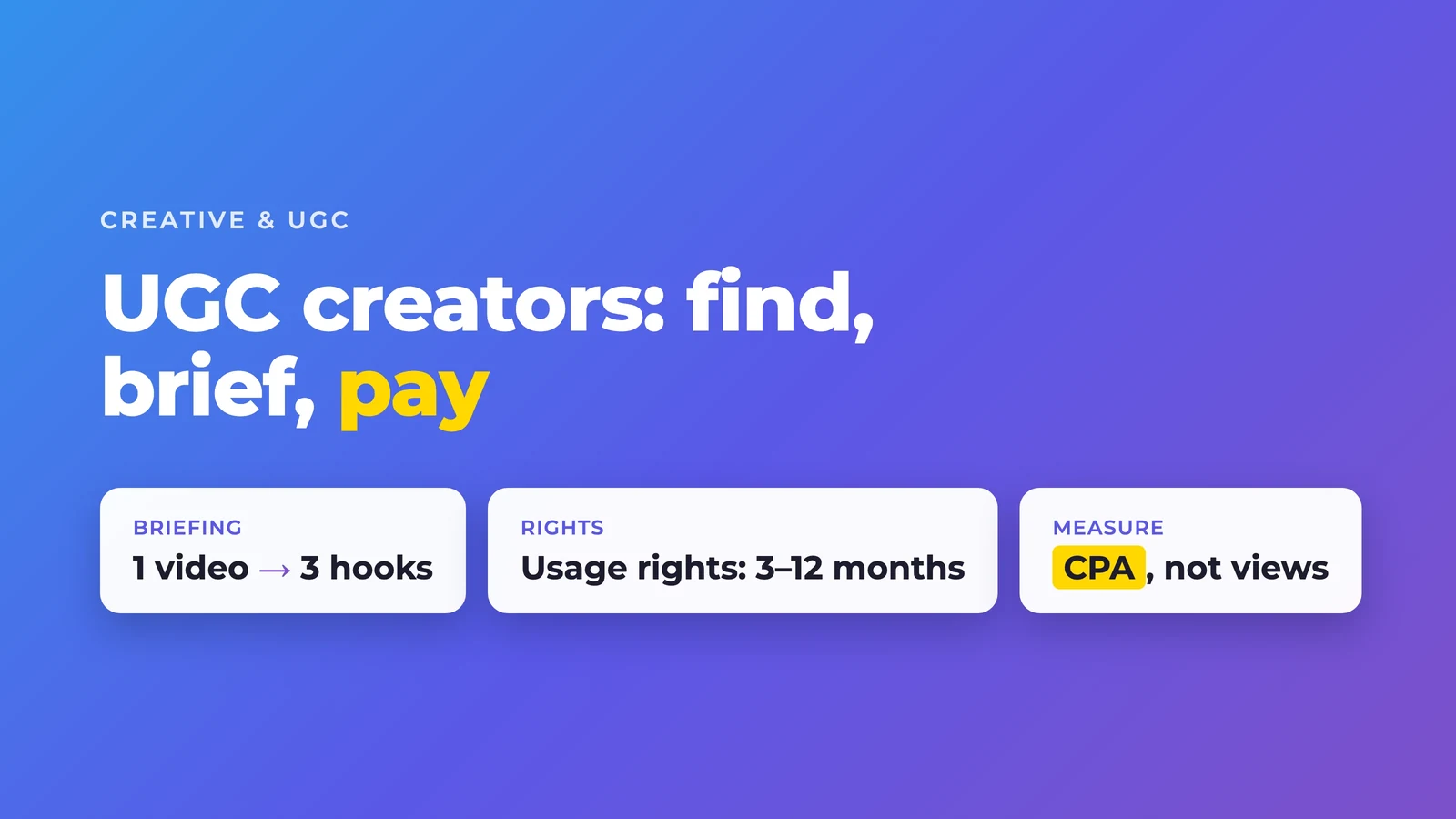
- Usage rights: time-limited ad permissions, often 3, 6, or 12 months, priced on top of the video fee. Unlimited rights cost more and only pay off for evergreen creative that runs for years.
- Performance bonus: a base fee plus a bonus tied to runtime or performance. It locks in good creators, but it needs clean measurement, or the bonus has no basis to pay out on.
Compare more than the price per video. Count the distinct concepts and usable variations included, then fit the order to your testing budget. The creative testing framework explains how to structure that work.
What belongs in a creator brief
Give the creator a clear brief: the reason to buy, the product moment, and claims that need evidence. Leave room for their own language. At approval, check whether the video communicates the intended message clearly.
A brief needs:
- The one problem: the single problem the video opens with, not several at once.
- Hook variants: 3 to 5 opening lines, either scripted or given as direction, for the creator to pick from or riff on.
- Product moments: the two shots the product has to appear in.
- What is off-limits: health claims, cure promises, or before-and-after comparisons, depending on the product category.
- Technical specs: 9:16 format, burned-in captions, natural light instead of studio lighting.
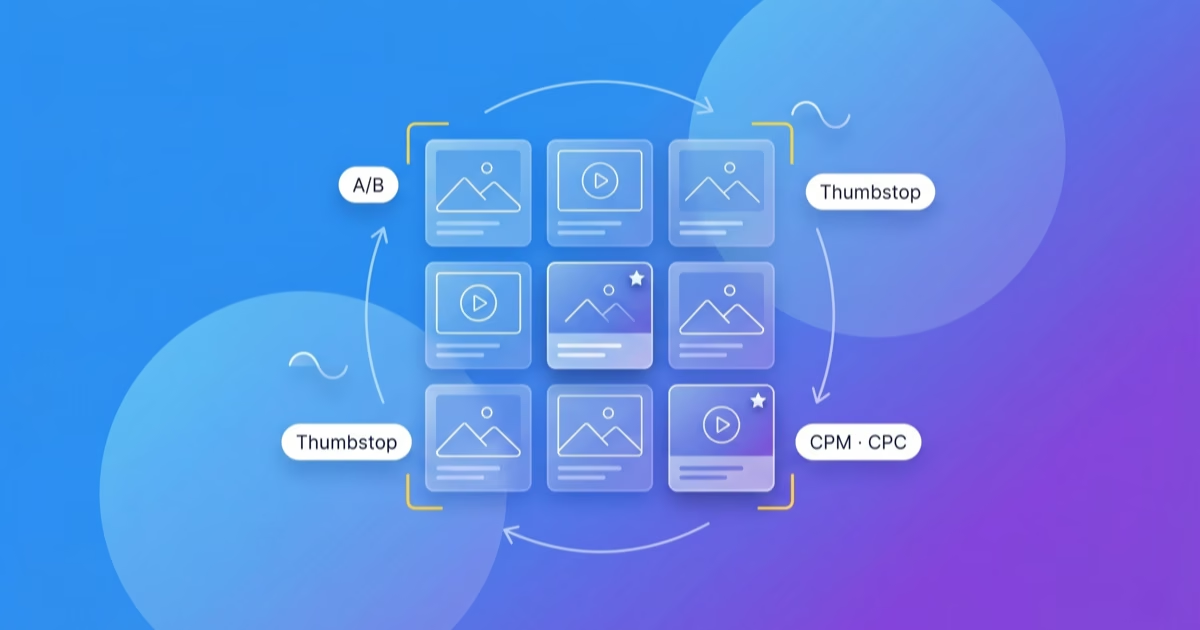
Ideally, one shoot can produce three test variations. Different hooks let you compare openings without reshooting the whole video. Judge the result in the ad account. For more on approval and that testing cadence, read why your approval process is costing you winning creatives.
How to Tell If a UGC Video Is Working
The verdict comes from the ad account, not a gut read on the raw cut.
- Hook rate: the share of impressions that watch past the first three seconds. The first signal on whether the opening actually stops the scroll.
- Hold: how long people stay after the hook. A strong hook followed by an immediate drop-off means the promise and the content do not match.
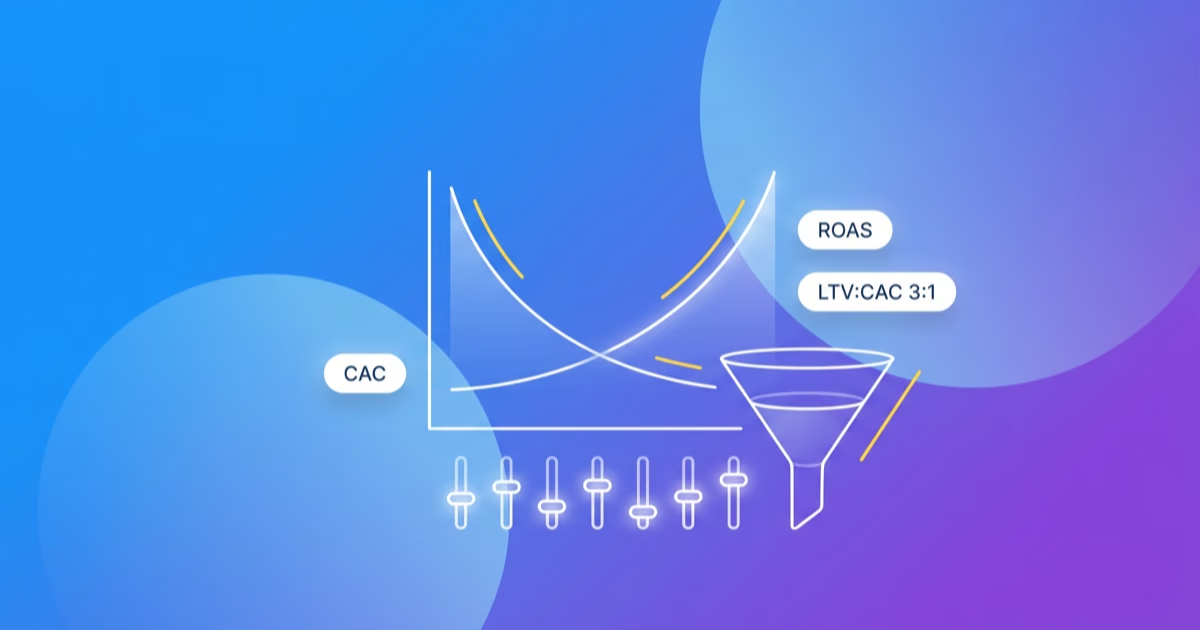
- CPA or ROAS against the target: Assess the economic result using the same cost and revenue basis. Views and likes help with diagnosis, but do not replace it.
After each test, give the creator specific feedback: which opening holds attention, where viewers leave, and which variation meets your economic target. A higher hook rate alone does not make the commission more valuable.
Getting UGC Produced Without Building a Team
Finding creators, writing briefs, agreeing rights and reviewing tests takes time. We handle that in our creative service and connect production with the results in the ad account.
See the creative service. Want to talk first? Let’s talk, 15 minutes.
FAQ on UGC creators
What is the difference between UGC and influencer marketing?
Influencer marketing buys reach: the product runs through the influencer's channel and community. UGC buys a video as an asset that the brand targets and runs through its own ad account. A creator's follower count has no bearing on reach in a UGC deal.
How many UGC videos do you need per month?
That depends on budget and how many concepts your account can test in a week, not a fixed target. The more test volume an account can absorb, the more raw footage it needs to keep enough hook variants running against each other. How to size that cadence is covered in the creative testing framework.
What are usage rights in UGC?
Usage rights are time-limited ad permissions for a video, often 3, 6, or 12 months, negotiated separately from the video fee. Once they expire, the video cannot run as an ad anymore unless the rights get renewed. Unlimited rights cost more and only make sense for creative meant to run for years.
Does a UGC creator need a big following?
No. The video runs through the brand's ad account, not the creator's channel, so their reach does not matter. What matters is whether the person can sell on camera: hook, natural delivery, and product moments that land.
If you would rather not organise this yourself
We handle creators, briefs and rights. As a TikTok ads agency and through our creative production, we also plan whitelisting and Spark Ads.
How to test the output systematically afterwards sits in the creative testing framework.