TikTok Shop Affiliate: Creators, commission and profit

TikTok Shop Affiliate pays creators a commission on sales through their content. What matters for you is the amount left per order after commission and costs.
Calculate that limit before inviting creators or approving a commission. Revenue alone does not make the partnership profitable.
What is TikTok Shop Affiliate?
In the TikTok Shop affiliate programme, brands work with creators who promote products in videos, lives or their showcase. When a sale comes out of it, the creator receives a commission agreed in advance.
TikTok distinguishes two routes:
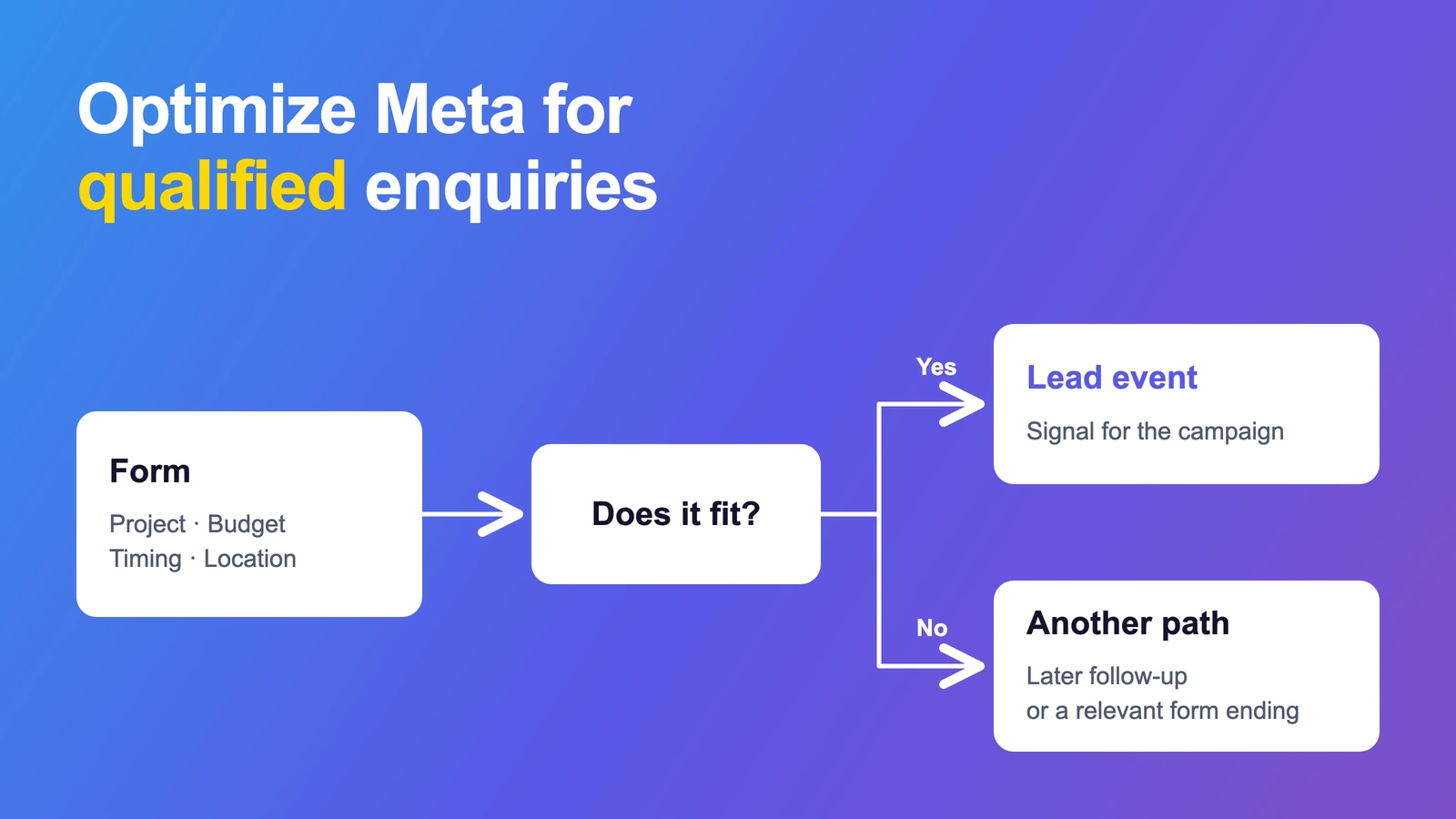
- Open collaboration: your products are open to suitable creators. That is the fast way to learn which products and hooks get traction.
- Targeted collaboration: you invite specific creators and agree terms. The right route when brand fit, product understanding or margin need more control.
TikTok describes both models in Seller Center. The choice is not a formality. It decides how much control you keep over brand, product and commission cost. TikTok affiliate collaborations.
UGC and TikTok Shop Affiliate are not the same
Both work with creators. The economic logic is still different.
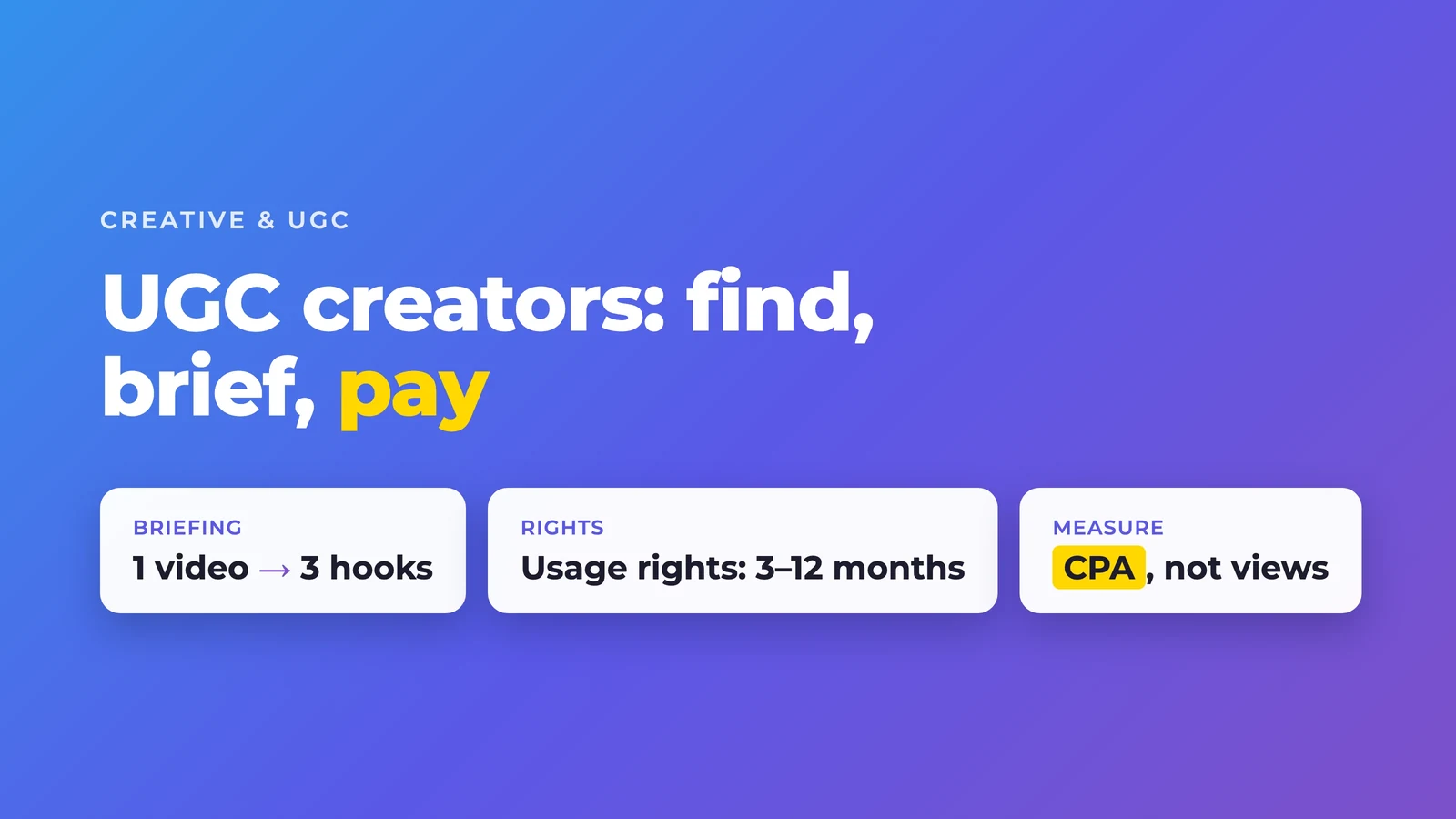
With UGC for paid social you buy an asset and usage rights, usually against a fixed fee per asset or package. The goal is creatives for your ad account, steered through briefing, testing and paid spend.
With TikTok Shop Affiliate you buy content plus potential distribution, usually paid variably per sale and sometimes combined with a fixed share. The goal is demand directly in TikTok Shop, steered through product, commission, creator fit and shop operations.
A good UGC video can win in the Meta account and trigger nothing in TikTok Shop. A TikTok affiliate creator can sell profitably even though you would never cut their video as a classic ad. Measure both models by their job.
Margin first, then the commission
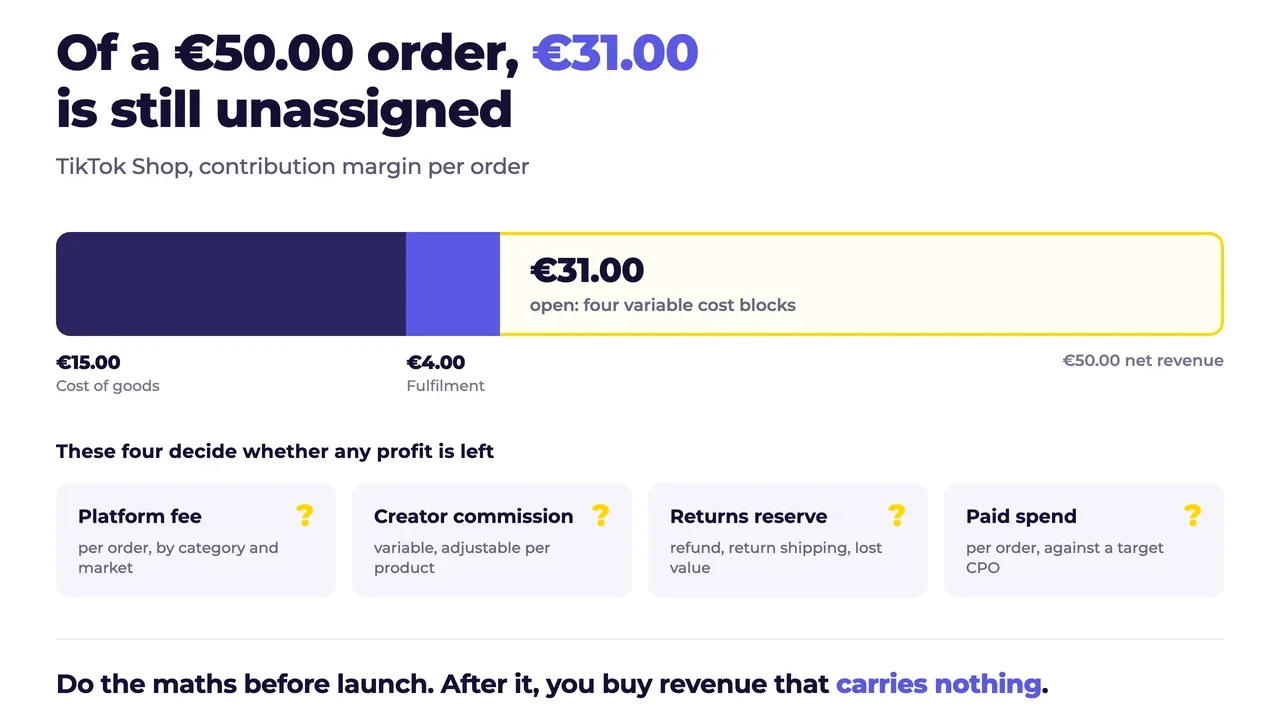
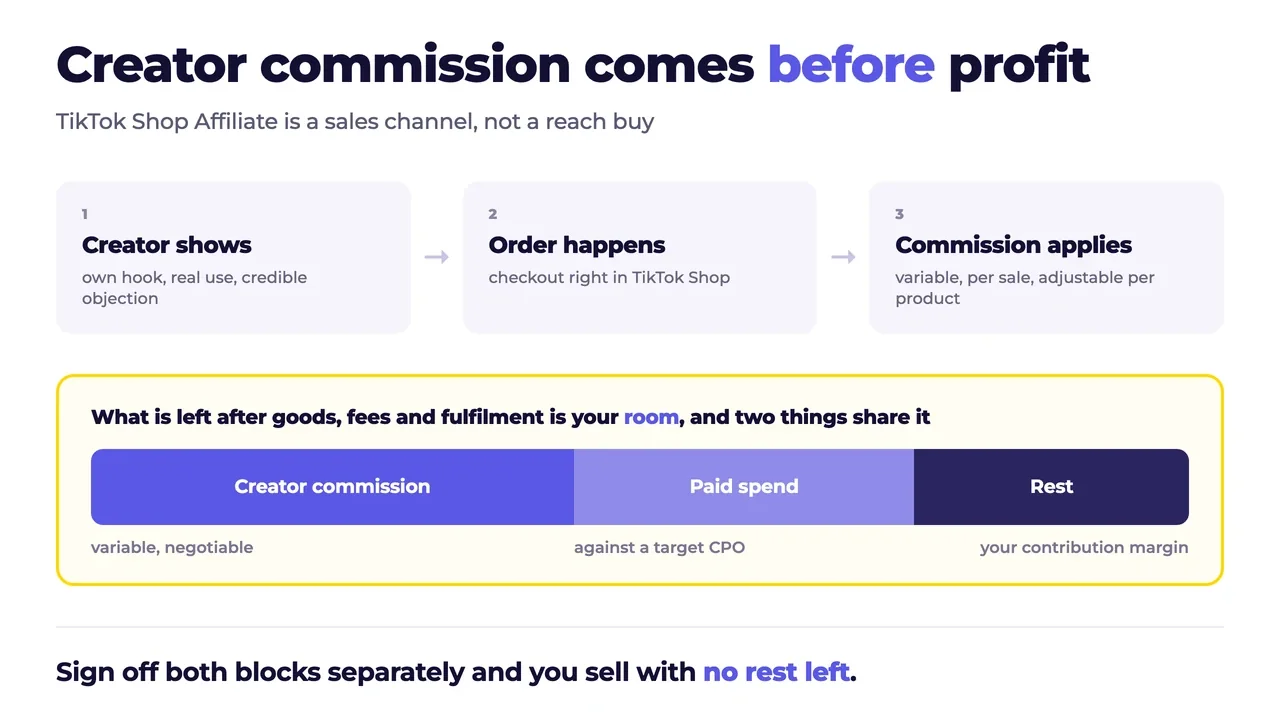
Creator commission is a variable cost of sale. It does not come after profit. It comes out of it first.
Before you set a rate, you need five numbers:
- Net revenue per order
- Cost of goods and packaging
- Platform and payment fees
- Fulfilment, shipping and returns reserve
- Maximum amount for creator commission and paid support combined
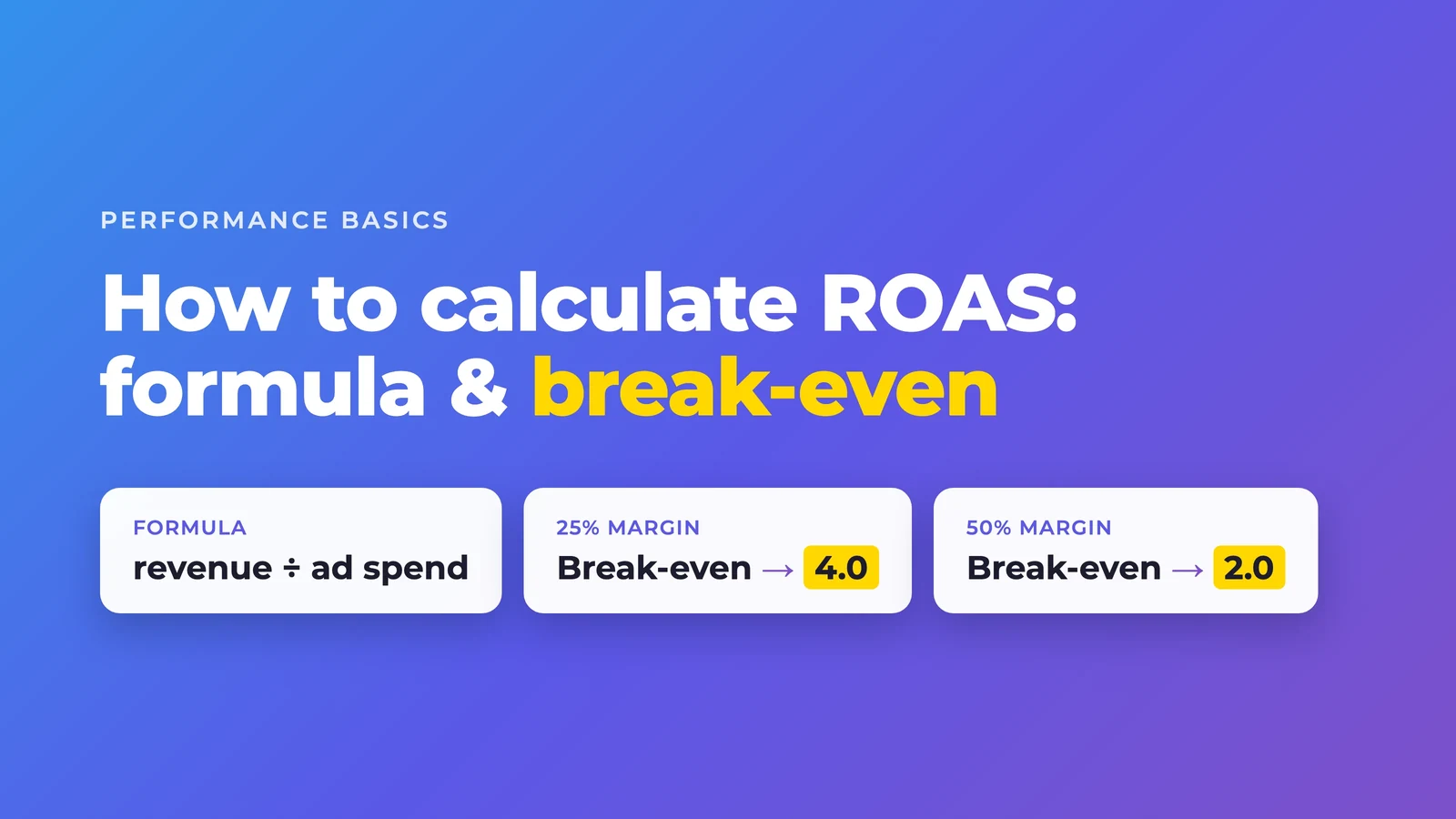
The last number is your spending limit. If it is missing, a high commission solves no growth problem. It just makes every extra sale more expensive.
The article on TikTok Shop costs 2026 shows the full calculation. For affiliate there is one more thing: a creator can generate revenue you later amplify with paid ads. Then commission and ad spend must not be signed off independently of each other.
How to find creators who sell
Follower count is a weak filter. For shop affiliate, what counts is whether a creator can make your product clear and trigger a credible purchase decision.
Before the first collaboration, check:
- Does the person understand the product without a prescribed script?
- Does the content show real use, or just the product in hand?
- Do the comments match the audience you want to reach?
- Can the creator answer an objection, not just name a discount code?
- Does the visual language fit the brand, even if you later amplify the post with Shop Ads?
In an open collaboration you do not need this check for every creator up front. But then you need clear guardrails: product approvals, commission limits, brand safety rules and a fast way to stop problematic collaborations.
A brief that does not over-script creators
The brief should not dictate every sentence. It should stop the creator from talking past the most important point.
A usable affiliate brief contains the customer problem before the product name, two or three provable product reasons, a clear no-go list for claims and tone, the real use situation to be shown, the desired shop CTA, and the mandatory disclosure notes.
Give creators room to write their own hook. The product and supported claims are fixed. How they explain them should sound like them.
What to measure beyond GMV
GMV is the most visible number. It is not enough to decide what to spend.
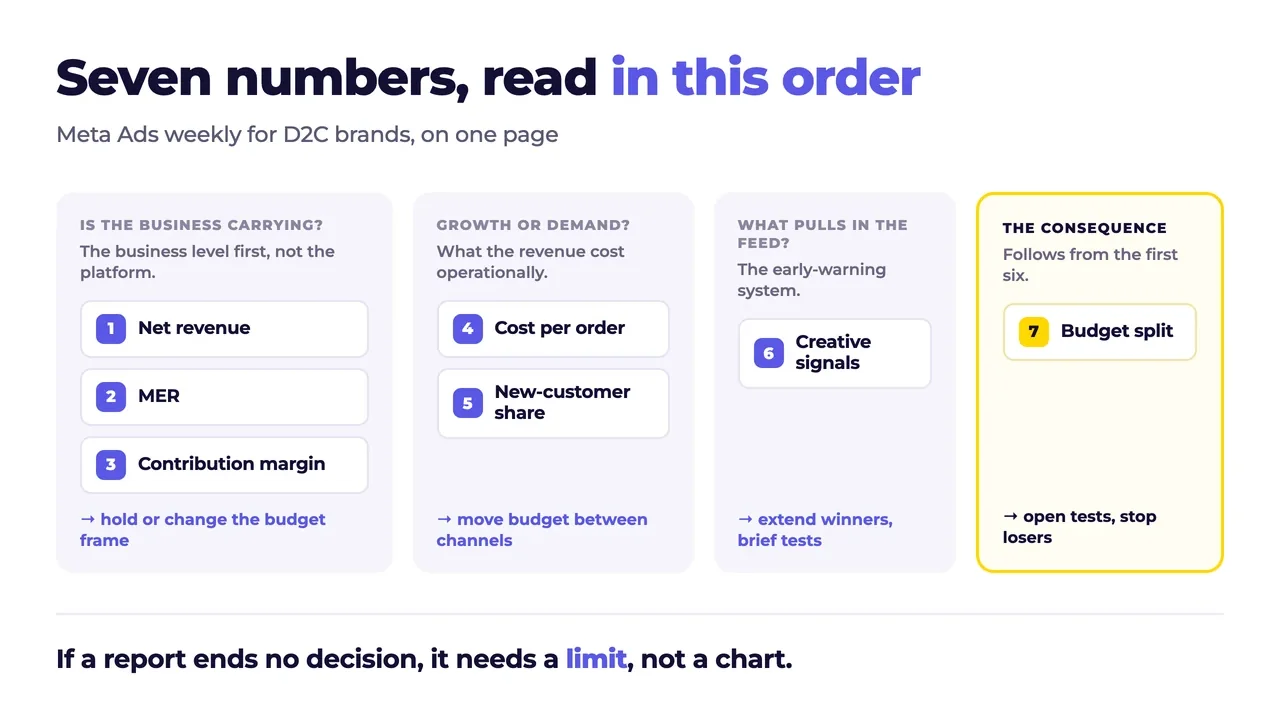
- Orders and net revenue: does the creator generate real demand?
- Creator commission per order: what does this demand cost variably?
- Return rate: does the expectation in the content match the product?
- New-customer share: does the creator open up new buyers or just discount existing ones?
- Contribution margin after commission: does the revenue cover the defined costs?
- Reusable creative signals: what can you test on in paid social?
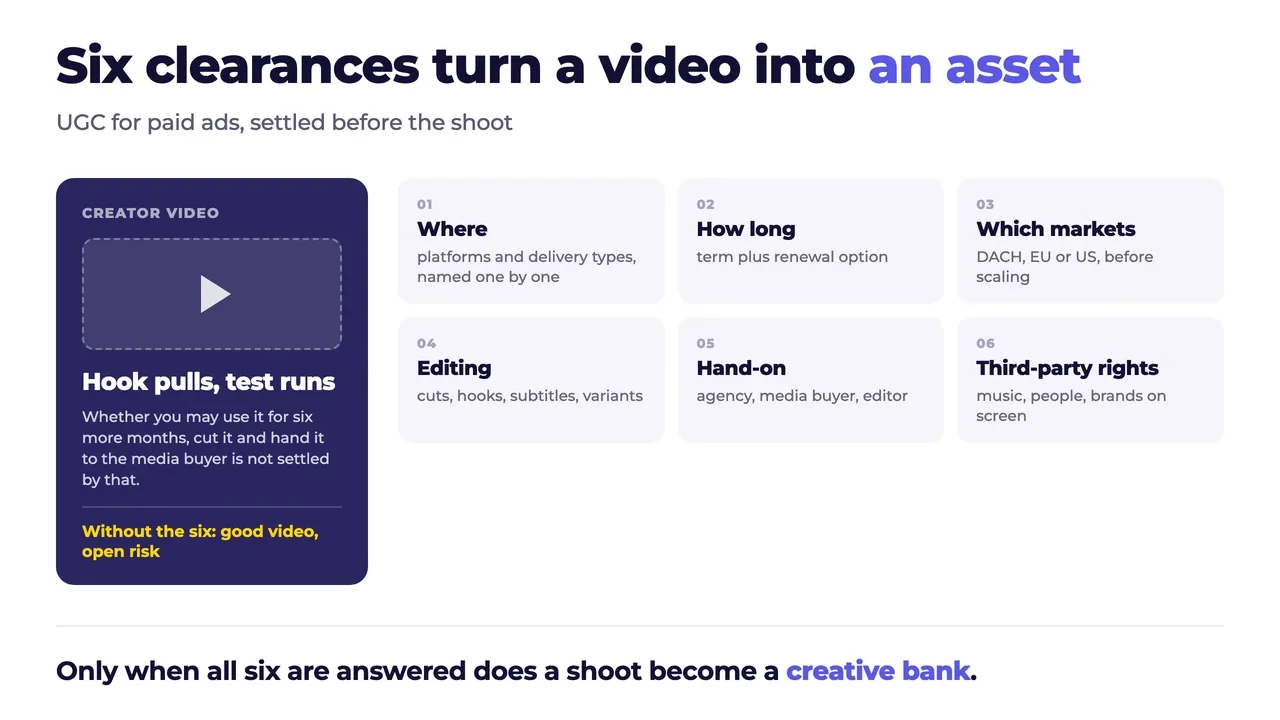
TikTok lets you authorise affiliate posts for Shop Ads. Then a creator post also runs as an ad. That is a good lever, but only when rights, commission and the extra media spend sit in the same calculation. TikTok explains affiliate videos for Shop Ads. What has to be settled contractually before a creator video runs as an ad is in the checklist on UGC usage rights.
A start that does not end in creator chaos
With 50 creators and ten products, you need clear attribution of samples, content, costs and sales. Start at a scale you can actually manage and evaluate.
- Pick two or three products with a traceable margin and good demonstration potential.
- Set a maximum commission and a maximum total CPO for each product.
- Work first with a small, controlled group of creators.
- Document hook, format, comments, orders and returns per creator.
- Use the best posts for controlled Shop Ads or Meta tests.
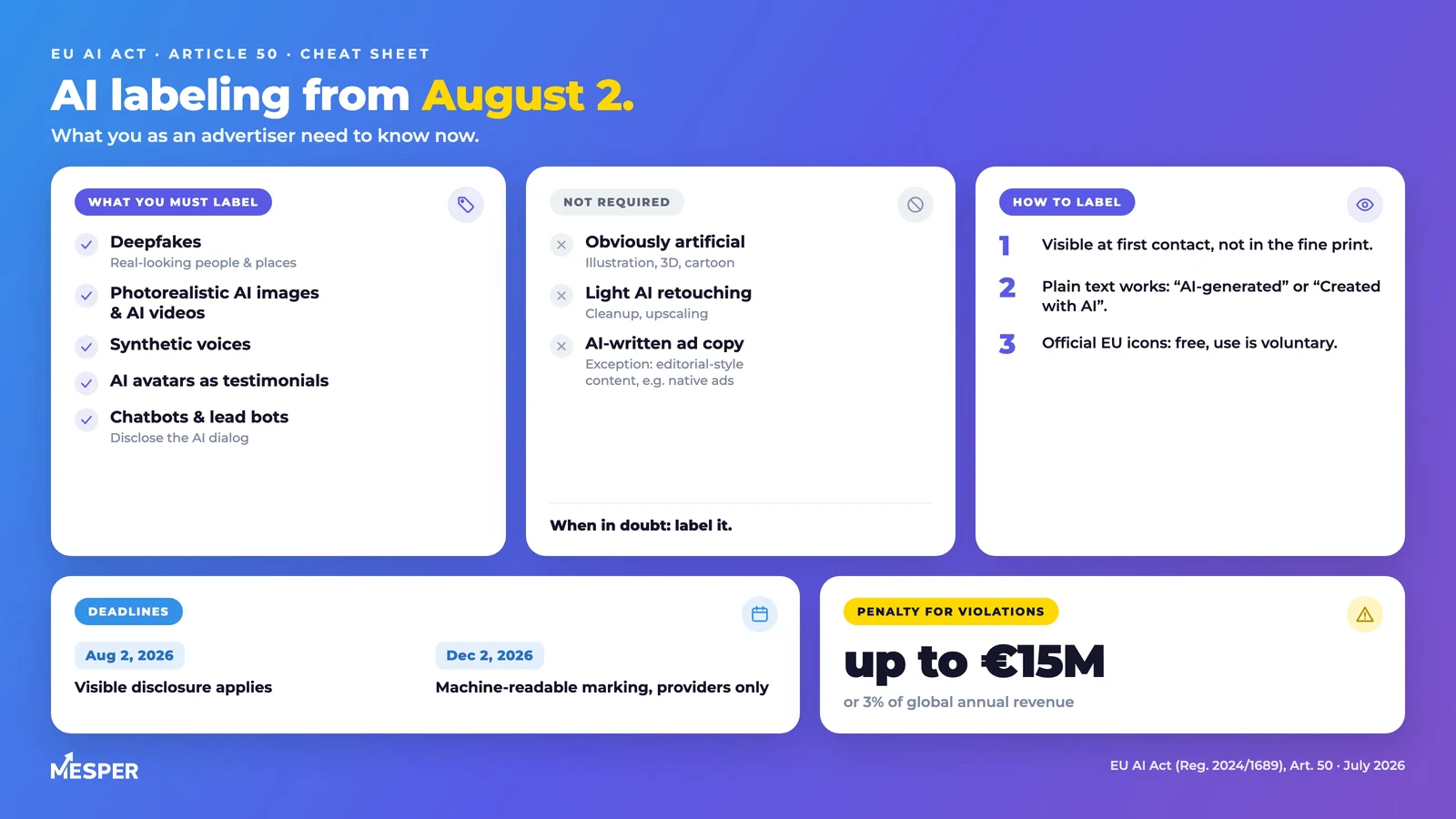
After four weeks, review which products meet your economic target, which creator messages sell, and whether the channel adds to your own store or shifts revenue away from it. Label what the data still cannot establish.
TikTok Shop Affiliate is sales, not PR
Plan creators, paid ads and margin together. Include the commission before putting budget behind a good post.
Then TikTok Shop Affiliate can be a very efficient channel. Without that calculation it is just another place where revenue looks good and profit disappears. If you want to set the channel up with a calculation that holds: TikTok Ads at Mesper.
Frequently asked questions about TikTok Shop Affiliate
How does TikTok Shop Affiliate work in Germany?
You set up the shop in Seller Center, define products and commissions, then work with creators openly or in a targeted way. The current requirements are in the TikTok Seller Center.
What commission should I offer creators?
Set a commission your product margin and maximum CPO can support. Calculate it per product rather than using an automatic standard rate.
Can I use affiliate videos as ads?
Yes, if the creator posts are authorised for it and the agreement covers the use. Also check how commission and paid spend act on the same order.