Server-Side Tracking and CAPI: Consent, Events and Control
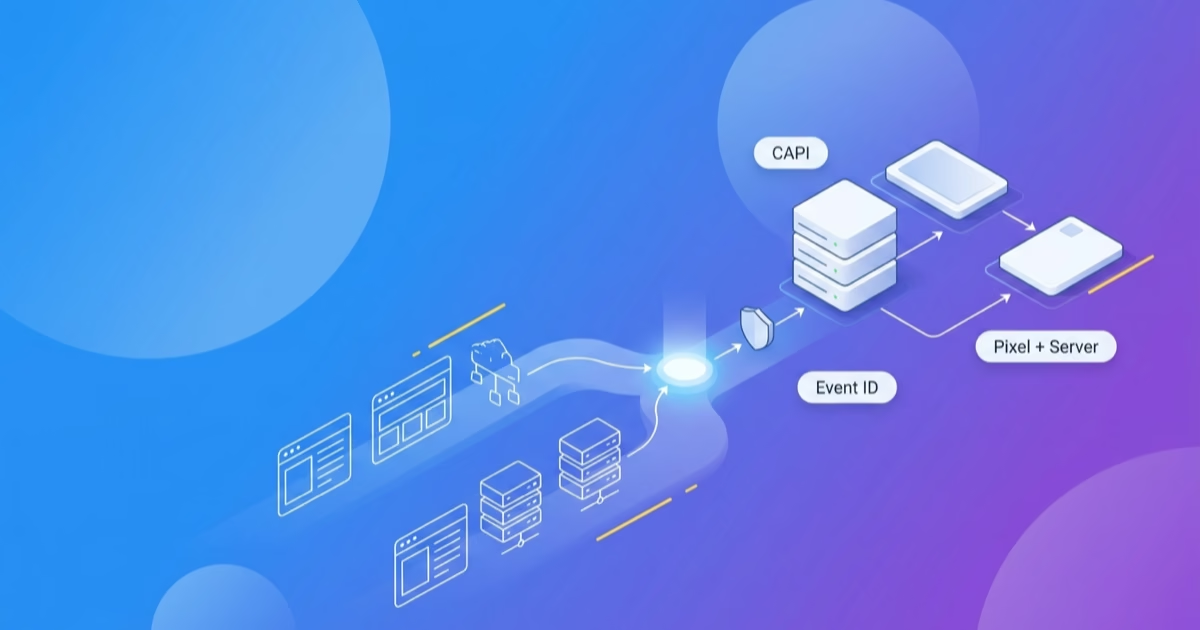

Server-side tracking can reduce technical measurement gaps. It does not replace required consent or guarantee complete data. Whether an event arrives when a browser pixel fails depends on where it originates and whether you may send it to the platform.
Updated: September 16, 2026. Consumer brands need a setup that reports permitted purchases and sales with correct values. A green pixel alone does not prove this.
What server-side tracking is
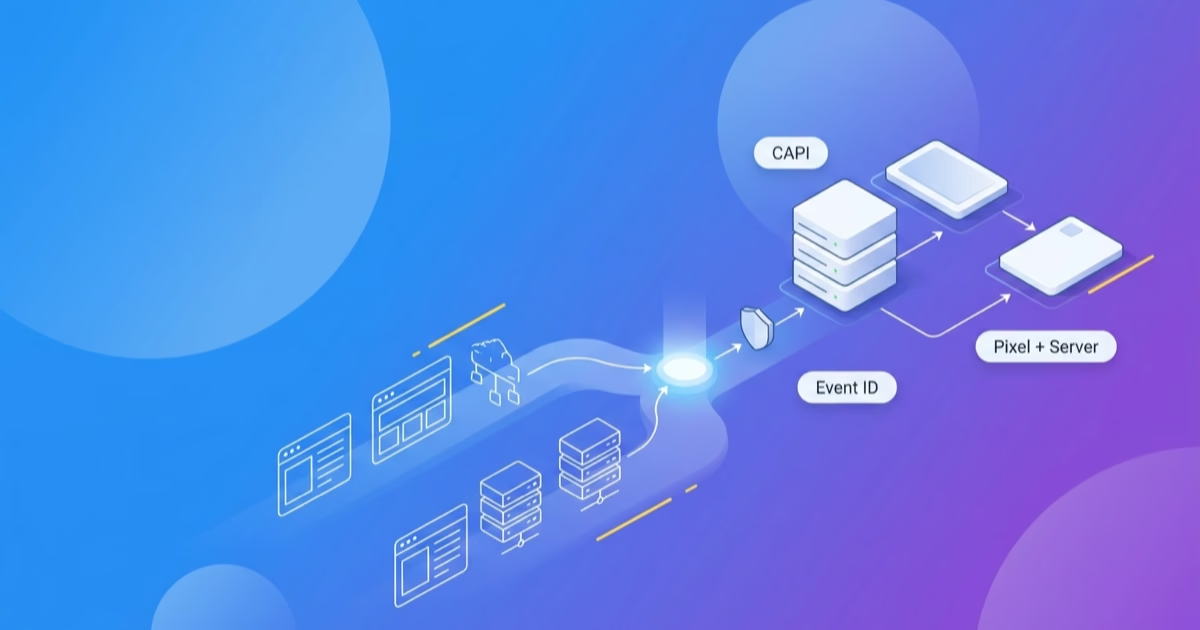
Client-side tracking sends data through a pixel or tag in the browser. Server-side tracking processes events on a server before forwarding them to a platform. Meta calls its interface the Conversions API, or CAPI. Google provides server-side Tag Manager and its own conversion interfaces. These are different products with separate requirements.
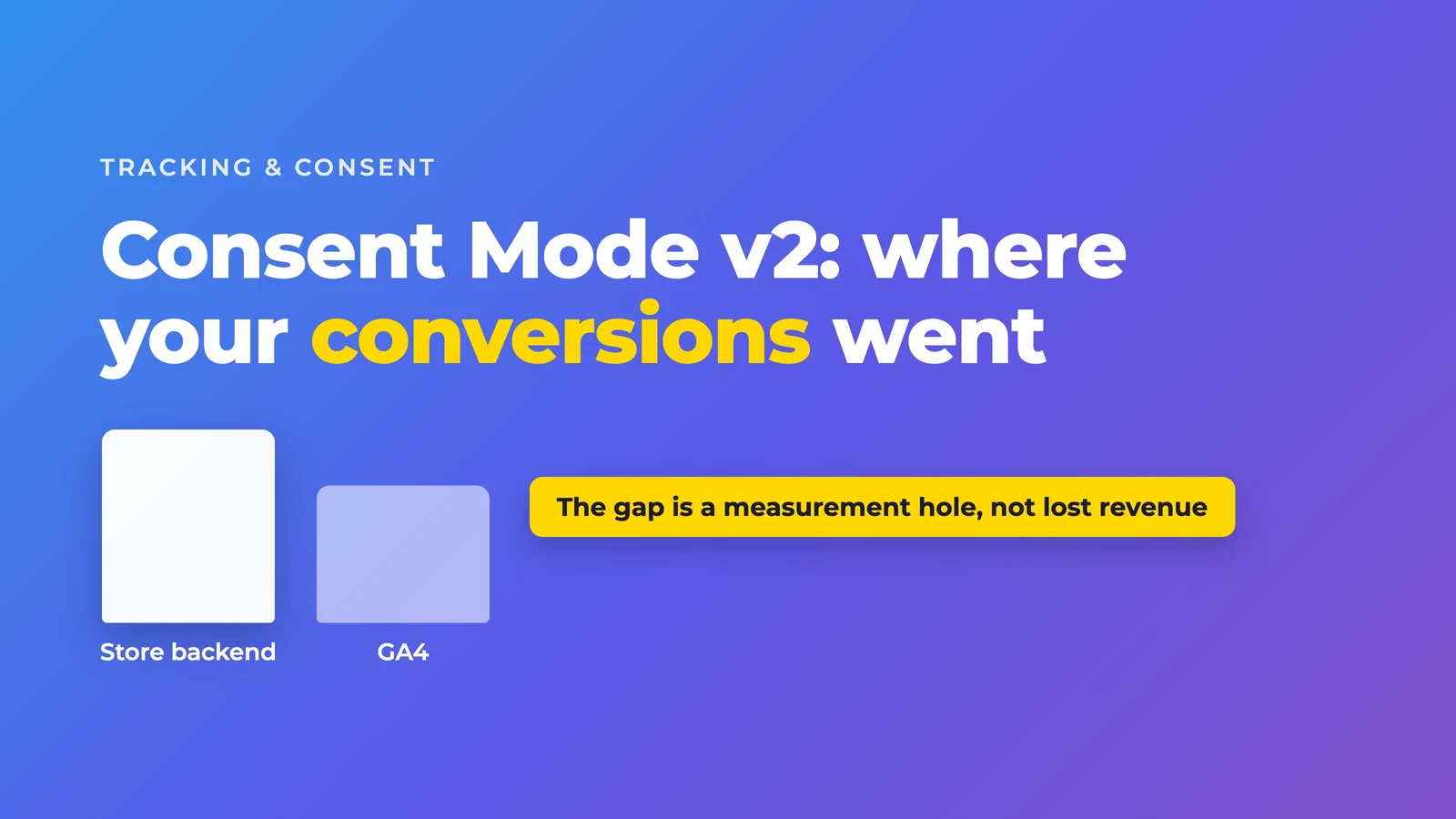
A server container is not automatically an independent data source. If a browser tag sends events to your server, that first path can still be blocked. An order event generated by your store backend has a different technical dependency. Google explains these data paths.
The key points
- Consent first: Changing the transport does not remove required consent.
- Separate browser and backend: A browser event forwarded through a server still depends on browser collection.
- Avoid duplicates: If the pixel and CAPI report the same purchase, the deduplication keys must agree.
- Matching is one check: Event Match Quality concerns matching. It does not establish complete purchases, correct values or valid consent.
- Measure your result: There is no universal percentage of recovered conversions.
Where browser tracking reaches its limits
Blocked scripts, page errors and network failures can prevent events. Missing consent is a separate issue. Do not send those events through CAPI to bypass a person's choice.
Permitted backend events can cover some technical pixel failures. Missing identifiers, platform policies and processing errors remain possible limits. More received events do not necessarily mean more attributed purchases or lower acquisition costs. Meta explains benefits and requirements.
How Meta CAPI works
Your server sends a real event with a name, timestamp, source and permitted matching data to Meta. A purchase also needs a clearly defined value and currency. The API neither invents missing transactions nor automatically restores missing browser context.
Contact information such as email and phone requires Meta's prescribed normalization and hashing. IP address, user agent, fbp and fbc follow their individual rules and must not all be hashed indiscriminately. Hashing does not replace a lawful basis for processing. Meta's parameter rules.
The five levers in your setup
1. Verify deduplication
Event-ID deduplication requires the same event name and unique ID on the browser and server. The pixel field is eventID; CAPI uses event_id. Both reports must reach the same pixel ID within the documented 48-hour window. A new ID on every retry can turn one purchase into multiple events. Meta's deduplication documentation.
2. Separate matching from overall data quality
Review Event Match Quality for web events, permitted parameters and their actual coverage. Never fabricate identifiers. Check missing events, duplicates and wrong values separately. High EMQ is not a complete tracking score.
3. Define a consistent value
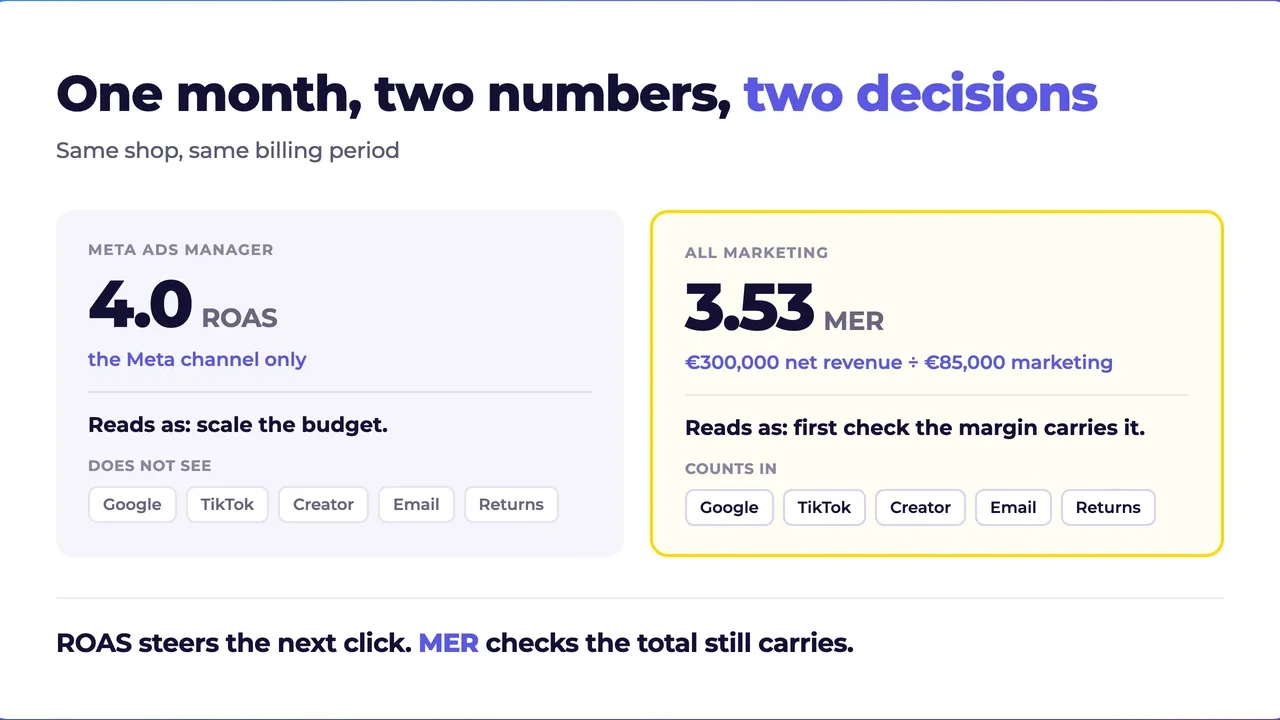
Decide whether your purchase value includes VAT, shipping, discounts and refunds. Use the same currency and value basis in tests and reports. A correctly transmitted gross value is still the wrong input for a net revenue comparison.
4. Add offline and CRM sales
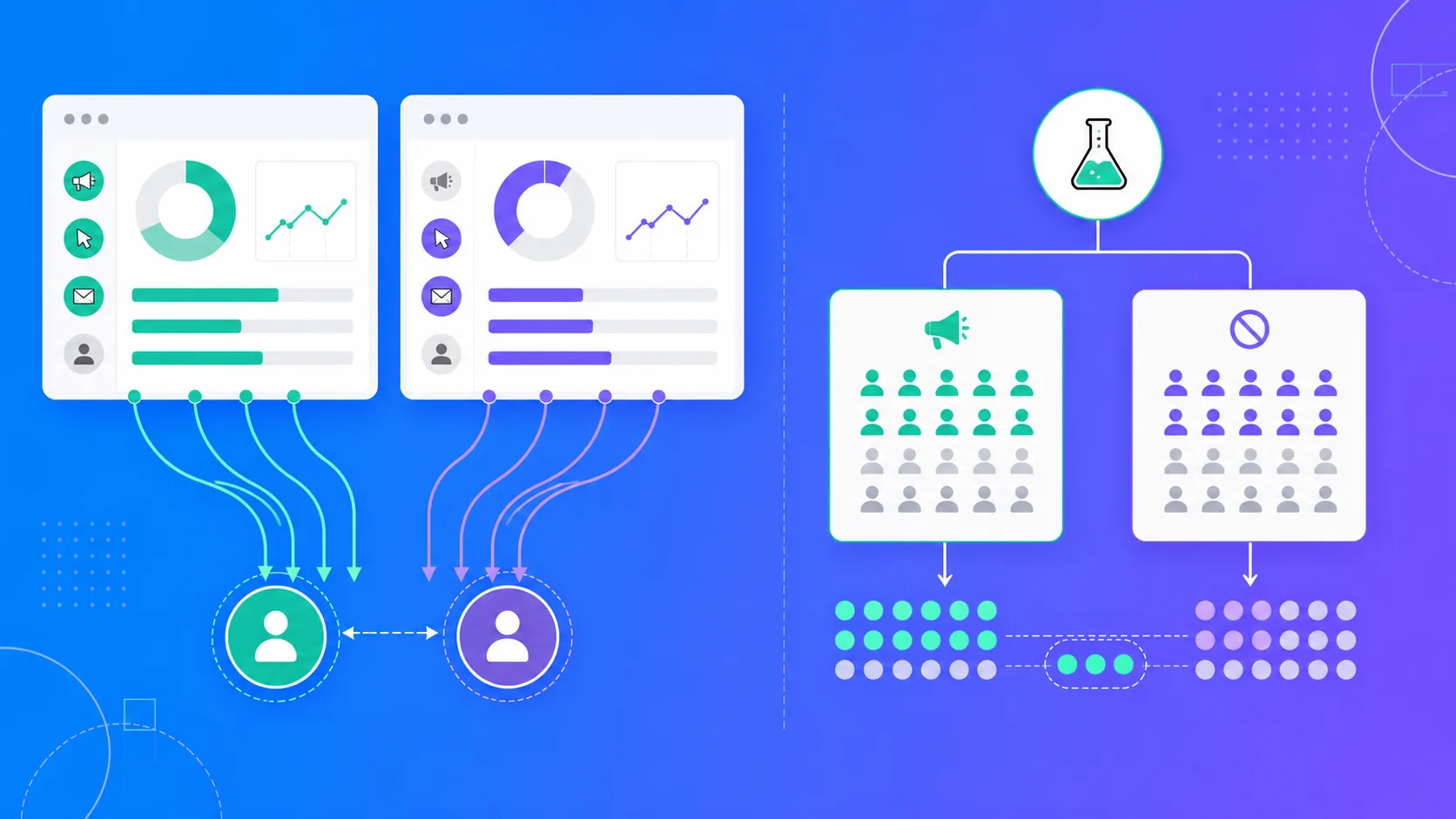
A qualified lead and a paid order are different events. Report real sales with the correct source and time. A CRM upload can make the sales process more visible. It does not automatically prove that an ad caused the sale.
5. Carry consent through the entire path
Check consent before transmission and how the server processes it. Google's Consent Mode adjusts Google tags to the choices it receives. It is not a cookie banner and does not automatically control Meta tags. Third-party tags need their own verified logic. Google: consent in the server container.
Google distinguishes Basic and Advanced Consent Mode. Advanced mode can send limited pings when cookie consent is denied. That is not a blanket permission to send personal CAPI events. Assess the permitted implementation for each platform and purpose.
Client-side and server-side compared
- Source: Browser tags collect browser context. Server tracking can process browser, backend or CRM events.
- Technical failures: A backend event can originate independently of the pixel. A browser-dependent event can disappear before reaching the server.
- Identifiers: Browser and cookie restrictions can still limit matching.
- Consent: Required consent applies to both paths.
- Completeness: Measure it for your setup. The server does not guarantee it.
How to accept the setup
Technical test example, not a client result: Place a controlled test order. The pixel and CAPI can send two reports. After deduplication, one purchase with the agreed value should remain.
- Test accepted, denied and changed consent.
- Compare event name, ID, timestamp, value and currency across sources.
- Send a controlled retry. It must not create another purchase.
- Test a browser failure. Does a permitted backend event arrive, or did collection depend on the browser?
- Inspect receipt, processing, deduplication, delay and matching in Events Manager.
- Reconcile real orders with reported purchases. Record exclusions and attribution differences.
Meta's verification guide treats these as separate quality checks. After launch, monitor errors, outages and changes to your store integrations.
Frequently asked questions
Do I need the pixel and CAPI?
Meta recommends both together. Their usefulness in your setup depends on data sources and consent logic. Parallel purchase reports require working deduplication.
Is server-side tracking automatically GDPR-compliant?
No. Infrastructure alone does not meet privacy requirements. Required consent, permitted data, purposes, transparency and processing must all fit.
How many conversions will I recover?
A fixed percentage would be invented. Measure permitted events, processing and matching before and after the change on the same basis. Additional reporting is not additional revenue.
Who builds this at Mesper
As a Meta ads agency and Google ads agency, we review tracking alongside campaigns. For implausible numbers, start with the common tracking mistakes. Attribution vs. Incrementality explains the difference between credited and caused revenue.









Klären wir deinen nächsten Schritt zusammen
Let’s work out your next step together