TikTok Shop costs 2026: What remains per order

TikTok Shop can bring new orders. Shop ROAS alone does not tell you whether they make money.
Before launch, calculate what remains per order after platform fees, creators, goods, shipping, returns and ads.
What does TikTok Shop actually cost?
TikTok Shop combines selling, creator affiliates and advertising. The costs depend on your setup. Check each item below and include the costs that actually apply to your order.
- Platform fee: charged per successful order. Look up the current rate for your category and market in Seller Center.
- Creator commission: the share on affiliate sales. Fix your standard rate, your margin floor and your approval process first.
- Cost of goods: product, packaging, picking. Use net unit cost, not a flattering purchase price.
- Fulfilment and shipping: in-house or partner, each with a cost per order and a delivery window you can commit to.
- Returns: refund, return shipping and stock you cannot resell. Budget a realistic rate, not a hopeful one.
- Paid spend: Shop Ads, Spark Ads or creator whitelisting. Steer this block against a target CPO.
TikTok documents Shop Ads and affiliate collaborations in Seller Center. In an open collaboration, creators can promote your products. In a targeted collaboration, you decide who you work with. Either way it is a variable cost of sale, not a nice-to-have. TikTok explains both affiliate models.
The calculation that belongs before your first listing
Work on net revenue per order. Not GMV, not the price in the feed, and not a platform figure that has not seen returns yet.
From net revenue, subtract cost of goods, platform fee, creator commission, fulfilment and shipping, your returns reserve and paid spend per order. What is left is your contribution margin before fixed costs.
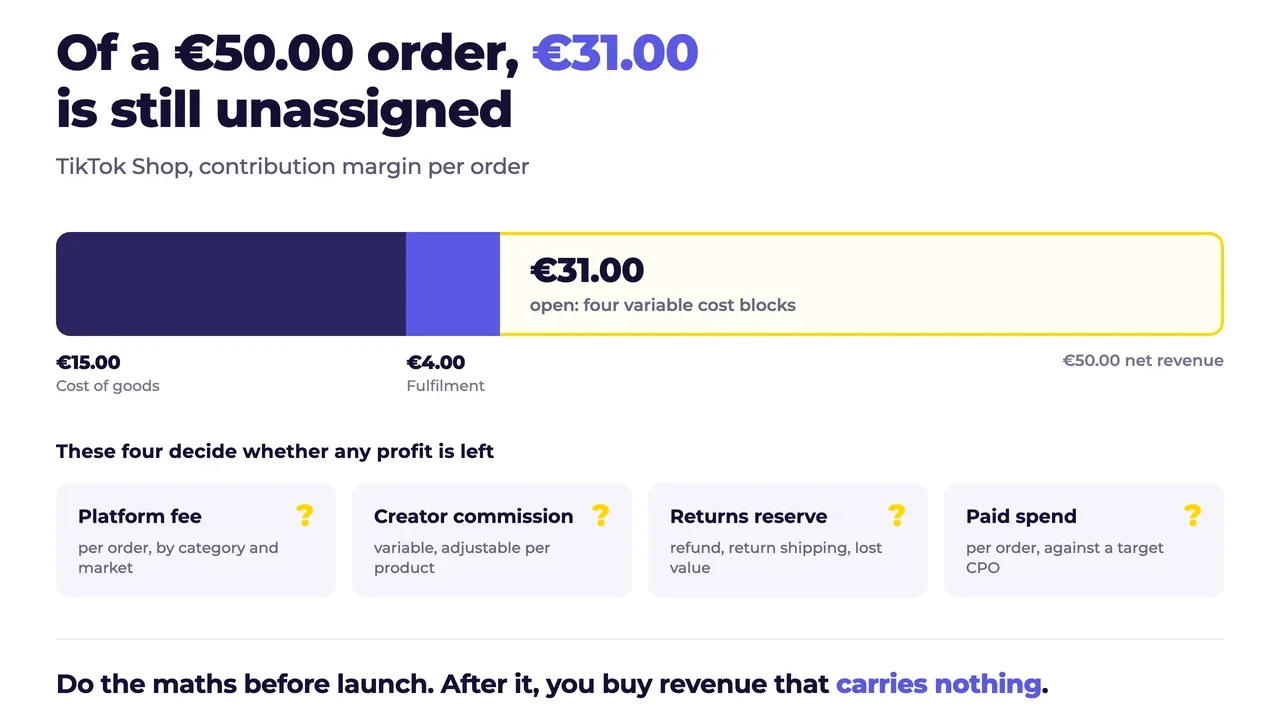
An example with placeholders is more honest here than a supposedly universal benchmark. At €50.00 net revenue, €15.00 cost of goods and €4.00 for fulfilment, shipping and packaging, €31.00 remains. Platform fee, creator commission, returns reserve and paid spend per order still come out of that. Those four decide whether the €31.00 becomes a workable contribution margin or nothing at all.
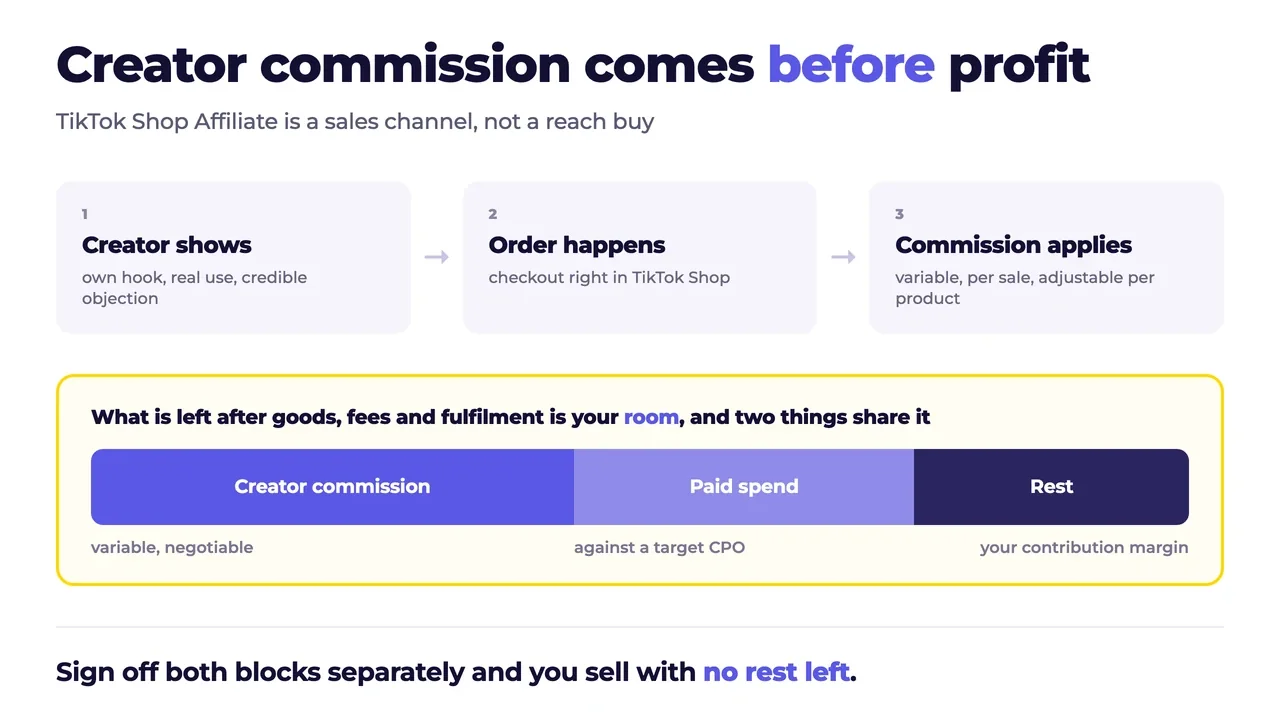
This is where it is settled whether you can grow with TikTok Shop. A high creator commission can make sense when it brings orders you would otherwise buy expensively through paid. It is wrong when it hits an already thin margin and you add paid traffic on top.
Creator commission is not a discount code
Plenty of brands treat affiliate commission as marketing budget without a ceiling. That works until two costs rise at once: the creator share and paid spend.
So do not set the rate by feel. Derive it from your maximum cost per order.
- Work out your contribution margin without creators and without paid ads.
- Define the minimum that has to remain after variable costs.
- Split the remaining room between creator commission and paid spend.
- Keep thin-margin products out of open collaborations by default.
TikTok allows different Shop Ads commission rates per product. That is the right lever when your products differ in margin or repeat value. TikTok documents the setting here.
Shop ROAS is not enough
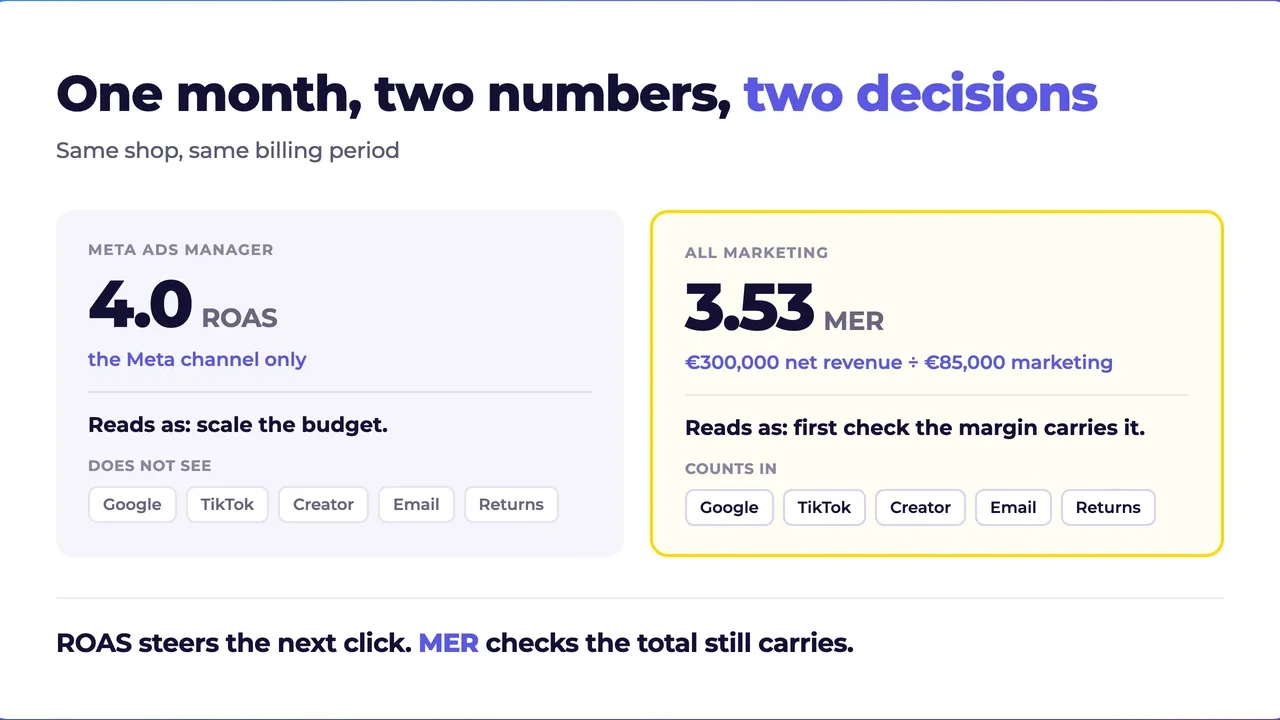
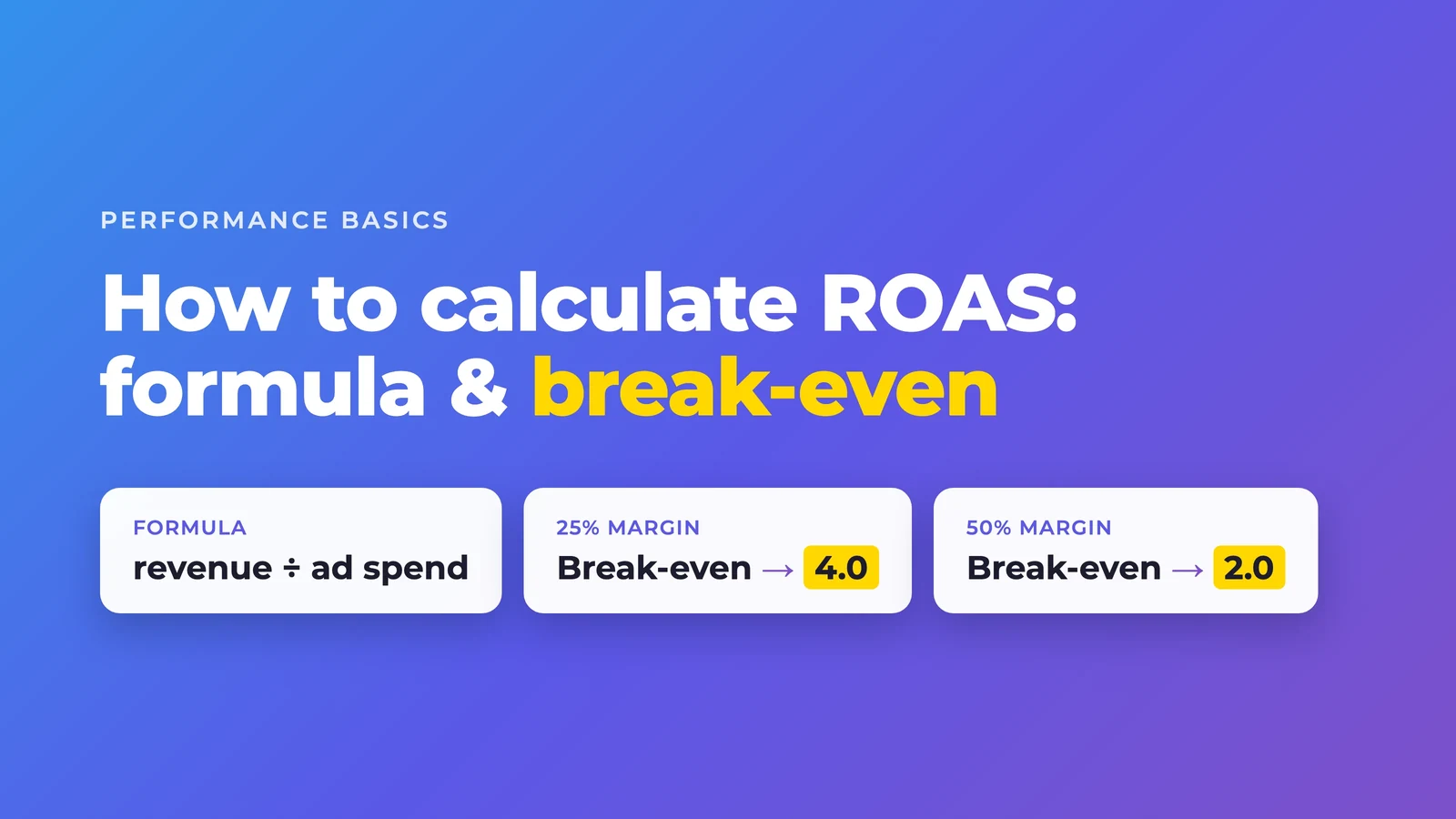
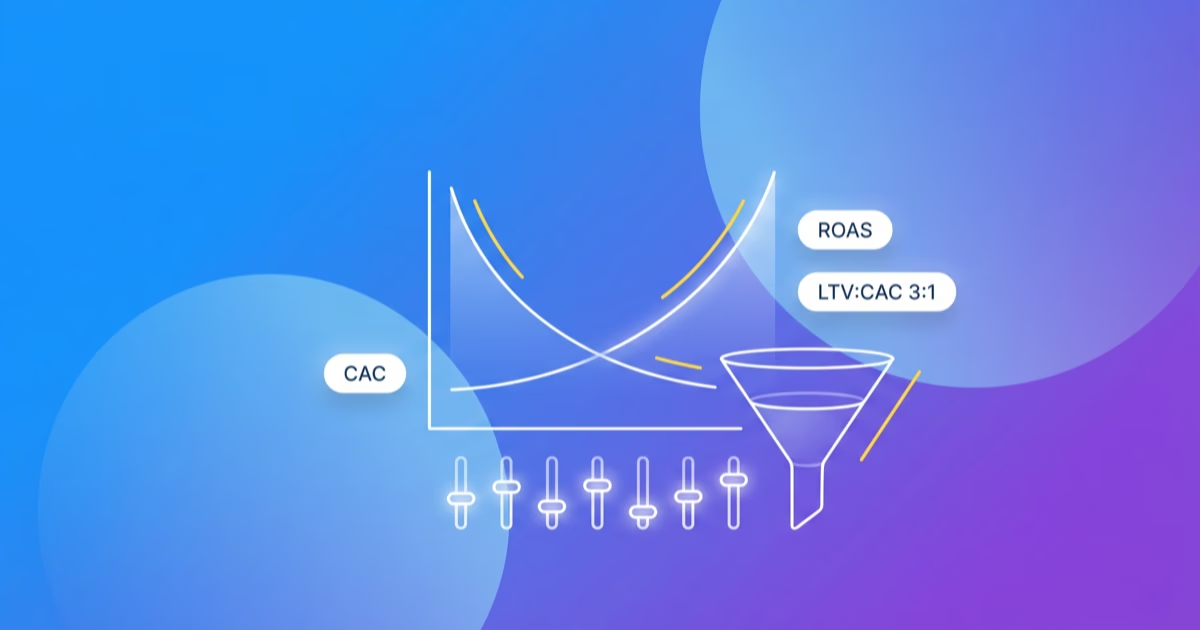
TikTok defines Shop Ads ROAS as attributed gross revenue divided by ad spend. That is useful for campaign steering. It does not tell you whether platform fee, commission and fulfilment leave room for profit. TikTok's definition of gross revenue and Shop Ads ROAS.
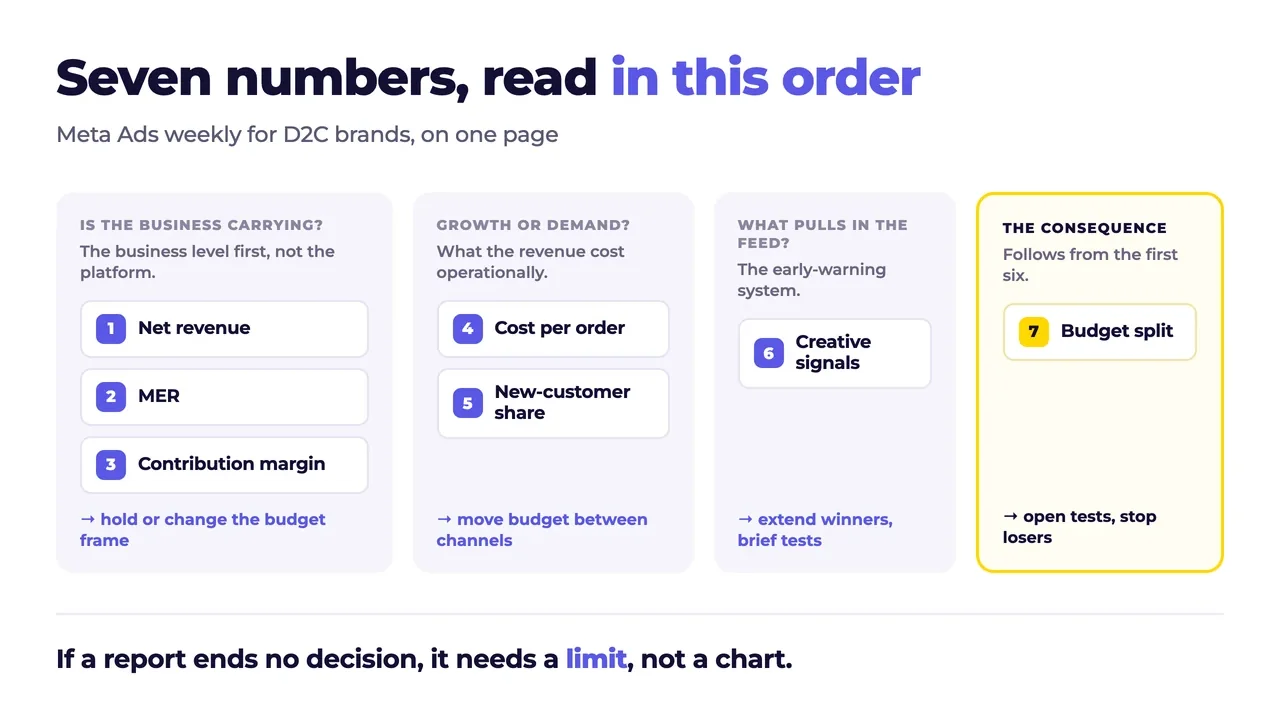
So steer on two levels. In Ads Manager on CPO, creative signals and Shop Ads ROAS. In the business on contribution margin after all variable costs, repeat rate, returns and blended MER.
A creator video can look strong in Shop reporting and still burn money. That happens when the commission is high, the share of discounted orders climbs, or returns in that product group run away. How to calculate the top-down view is in the MER guide.
Which brands fit TikTok Shop?
TikTok Shop does not suit every D2C brand by default. Good conditions are a product that makes sense within seconds, a margin with room in it, and fulfilment that reliably hits short delivery times.
It gets hard with products that need explaining, very thin margins, high return rates, or a brand whose customer experience lives in packaging and advice. Then the extra checkout does not necessarily bring extra profit. It can simply move the purchase from your own shop to a marketplace.
Launch checklist before the first euro of spend
- Record the current fees from the local Seller Center in writing.
- Define a maximum CPO and a maximum creator commission for every launch product.
- Run a test order from feed through to return.
- Set up tracking so that shop revenue, creator orders and paid orders stay separable.
- Start with the two to five products whose margin and creative fit you know. Not with ten.
- Review contribution margin after seven and after 30 days, not GMV.
Calculate your TikTok Shop economics before launch. The result gives you a limit for commission and ad spend. Review that calculation when fees, returns or fulfilment costs change.
Work out your break-even before launch
Put goods, platform fees, creators, shipping, returns and ads in the same calculation. Use the profit planner as a starting point and include all TikTok Shop costs that apply to your orders.
Want to check whether TikTok Shop makes sense for your business? Let’s talk. See how we handle TikTok Ads.
Frequently asked questions about TikTok Shop costs
What fees does TikTok Shop charge?
TikTok Shop charges different fees depending on market, product and programme. Check the current rate directly in Seller Center before you sign off a margin or a creator deal. Flat rates circulating publicly go out of date quickly.
How high should a TikTok Shop creator commission be?
High enough to motivate creators, and low enough that your target contribution margin survives platform, goods, fulfilment, returns and paid spend. There is no sensible standard rate across all products.
Is TikTok Shop worth it without paid ads?
It can work when creators or your own organic content generate demand reliably. Budget for content, commission and operations anyway. Organic does not mean free.