UGC usage rights: What to agree before the shoot

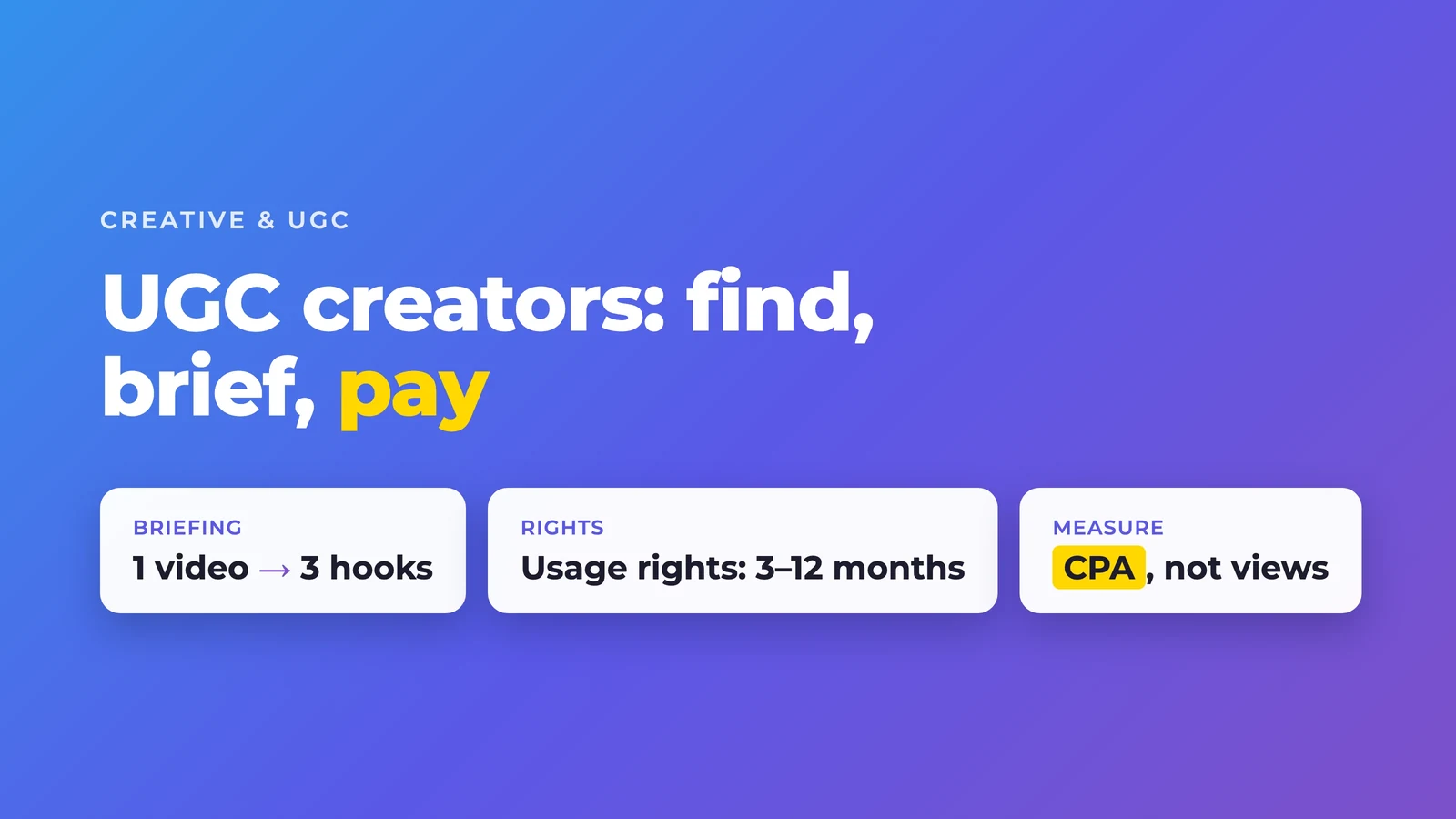
Want to use the video on Meta and TikTok, create new edits or pass it to your media buyer? Agree the rights before the shoot. A good ad-account test does not tell you what you may do with the material.
Without that agreement, the intended use remains unresolved. Set the term, platforms and editing permissions before putting ad spend behind the video.
This article is not legal advice. The checklist helps you define the intended use before working with a creator. Have the final contract reviewed by a law firm specialised in media and advertising law.
What are UGC usage rights?
Usage rights govern how a work may be used. German copyright law allows a limit by territory, time and content. It also distinguishes between a simple and an exclusive right of use. Section 31 UrhG describes this basic logic.
The rights determine whether you can post the video once on Instagram or run it as an ad in several countries and edited versions.
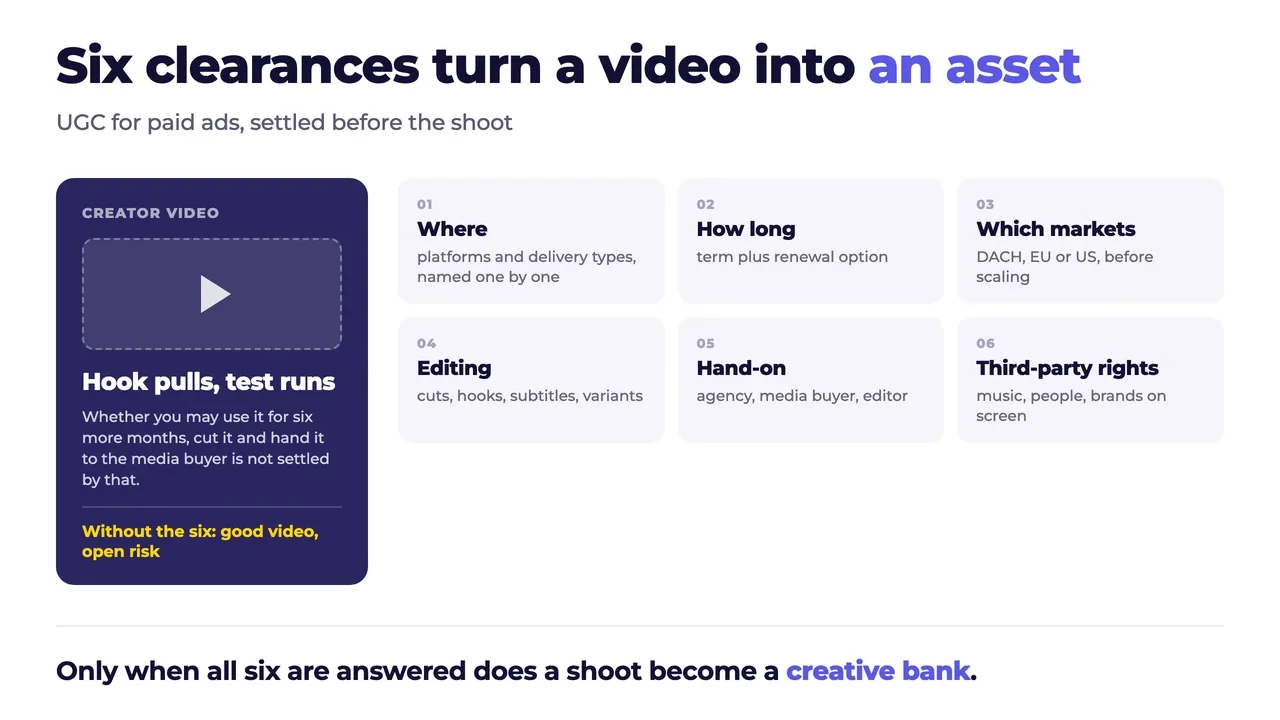
The six questions that must be answered before signing
1. Where may the asset run?
"Social media" is too vague. Define the platforms and delivery types concretely:
- organic brand channels
- Meta Ads, TikTok Ads, YouTube Ads or other paid channels
- website, product page, email and marketplace listings
- Spark Ads, whitelisting or delivery through the creator account
An asset cleared only for an organic post solves no paid-social problem.
2. How long may the brand use it?
A good creative can be tired after weeks. A very good one runs for months. So the usage period has to match the planned use.
Unlimited sounds convenient, but it is not always necessary and drives the price. Often a clearly defined term with a renewal option is cleaner. What matters is that paid delivery does not quietly run on after it expires.
3. Which countries does the clearance cover?
If you only advertise in Germany today, "Germany" can be right. If your shop is meant to serve DACH, the EU or the US, you need those markets in the contract. Otherwise every later scaling has to be renegotiated.
4. May you cut, subtitle and build variants?
Paid social lives on variants. New hooks, shorter cuts, different captions, stills and translations are normal test work. If edits are not settled, exactly that work can be blocked.
So write down whether the brand may shorten, combine, subtitle, dub, reformat and use the material in variants. That decides whether one shoot becomes a creative bank.
5. Who may use the material?
Creators, agencies, media buyers and editors work with the same material. Agree which service providers may use it and whether the necessary rights may be passed on.
That does not mean you have to sell the material freely. It means your operational team can work with it.
6. What happens with music, people and third-party brands?
The creator can grant rights to their own video. Not automatically to everything that appears in it.
Before the shoot, check:
- Is the music cleared for paid ads on the intended platforms?
- Have all recognisable people consented?
- Are third-party brands, logos, artworks or screens in picture and sound avoidable?
- May the creator make the product claim as stated, or does it need a fact check?
Music and additional people in particular quickly turn a supposedly simple UGC asset into a problem.
Simple or exclusive: what do you really need?
A simple right of use allows the brand the agreed use without automatically excluding other uses. An exclusive right excludes others from the permitted use. Section 31 UrhG separates these two cases.
For many creator ads you do not need exclusivity on the whole video. A limited category exclusivity can matter more: the creator should not advertise directly for a competing brand for a period. Whether that makes sense depends on product, face and campaign idea.
Do not buy more exclusivity than you economically need. But do buy the paid rights along with it if you want a paid asset.
Payment and rights belong together
Payment has to match the use. Duration, frequency, extent and timing of use are explicitly part of what counts as appropriate under the law. Section 32 UrhG.
In practice that means a day rate for an organic post is not automatically the payment for twelve months of paid ads in several markets. So separate cleanly by item:
- Production: shoot, edit and delivery of the agreed assets.
- Organic use: post on the brand or creator channel.
- Paid usage: use as an ad, defined by platform, period and market.
- Whitelisting: delivery through the creator account.
- Exclusivity: limiting collaborations with competitors.
- Renewal: price and terms after the first period ends.
That way a later renegotiation is a surprise to neither side.
The operational creator check before the shoot
- Sign the contract and usage rights before production, not after the first good cut.
- Record deliverables exactly: raw material, finished versions, subtitles, stills, formats.
- Set platforms, countries and term of the paid usage.
- Clarify editing and hand-on rights for agency and media buyer.
- Clear music, people, claims and third-party brands in advance.
- Write the expiry date into the ad asset tracker.
- Have the legal template reviewed regularly, especially for new markets or public figures.
Good UGC rights are what make creative testing scalable
Clear rights let you compare hooks, make new edits and run good ads longer. Without that agreement, you have to resolve the intended use again.
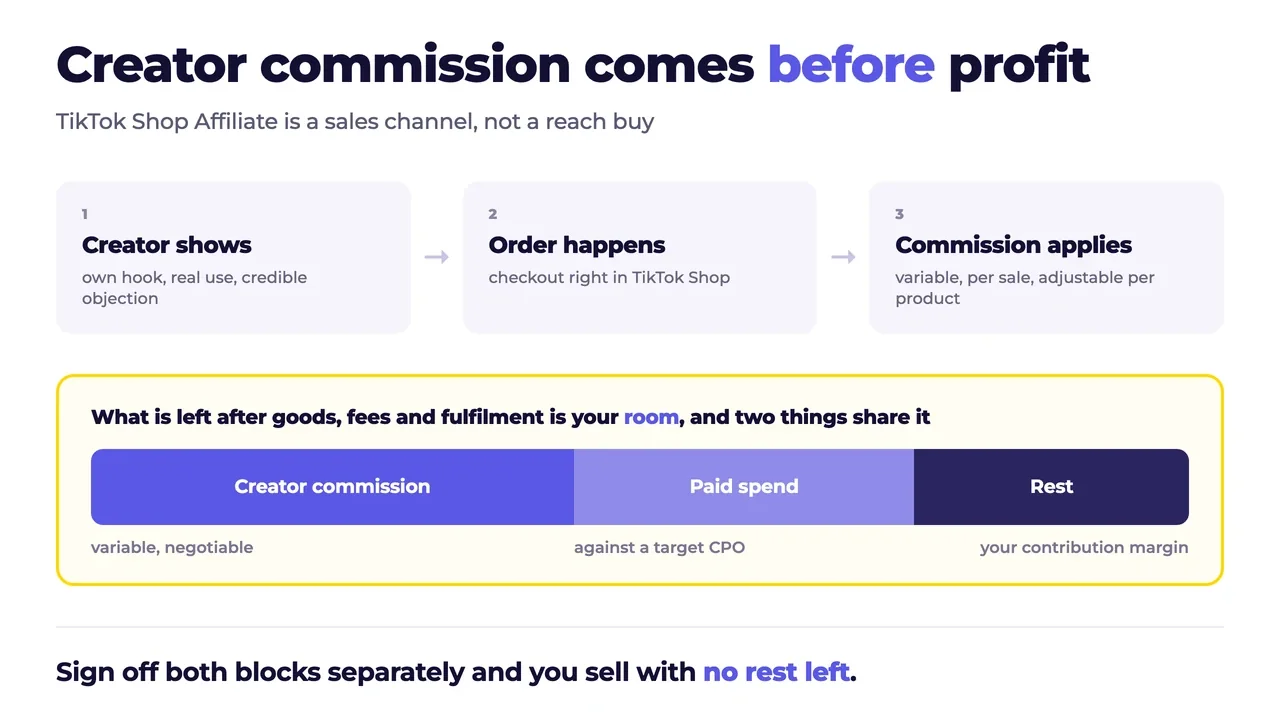
The UGC creator guide shows how to pick and brief creators. This checklist makes sure the output is actually usable afterwards. When creators are also meant to share in the sale, the calculation from the article on TikTok Shop Affiliate comes on top.
How we build creator assets into a test system is on our Creative Design page.
Frequently asked questions about UGC usage rights
Do I always need a contract for UGC?
For paid ads you should agree the usage rights at least in writing and concretely. Verbal assumptions scale badly and are needlessly uncertain in a dispute.
May I simply cut a creator video?
Only if the agreement covers the planned edit. Clear variants, subtitles, new hooks, translations and combinations with other material in advance.
Is it enough if the creator publishes the post on their account?
No. A creator post and use as a brand ad are different uses. Clear paid usage, whitelisting and platforms explicitly.