Why your marketing “works”, but you still don’t win customers


Why you don't win customers despite marketing that works
Your ads get clicks, but too few visitors become customers. Check what happens next: does the landing page match the ad, is the offer clear, and is there an obvious next step?
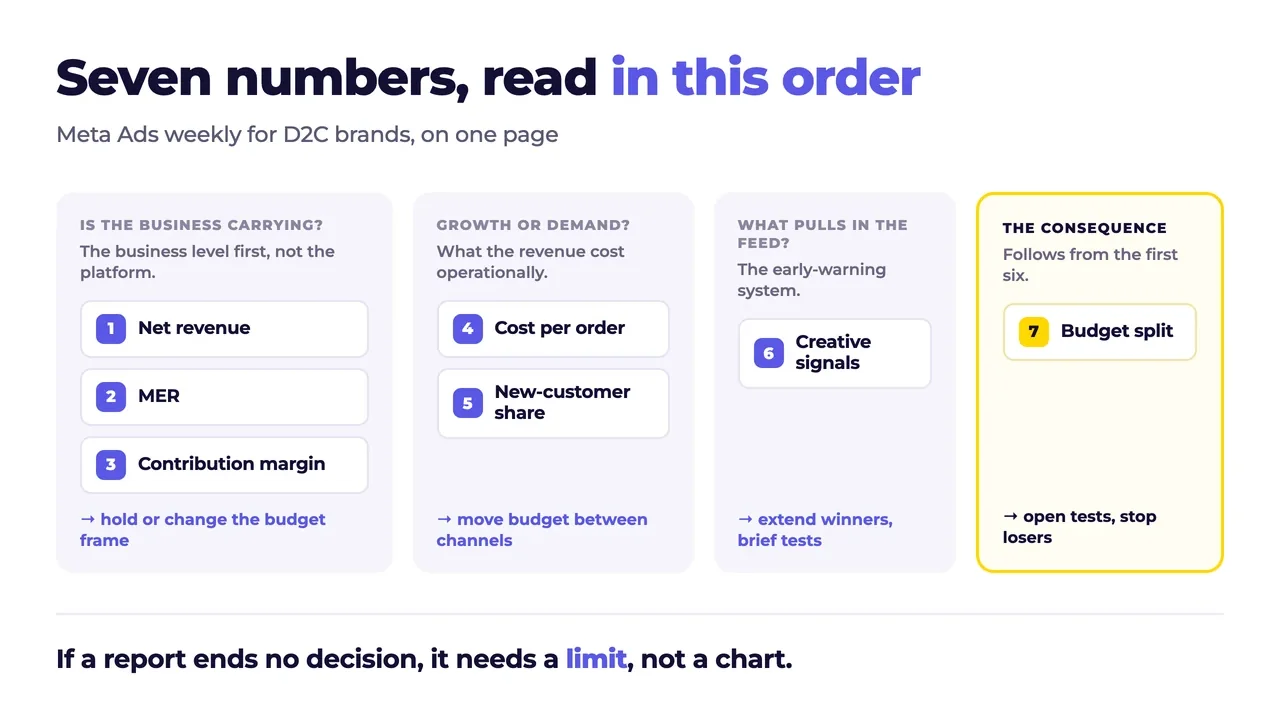
Keep delivery metrics and business results separate. A good click rate does not settle whether the campaign wins customers at an affordable cost.
What does "marketing that works" really mean?
Assess marketing through its economic result. Clicks and impressions explain part of the journey. Then check how many visitors buy, which customers you acquire, and what remains after costs.
The three most common reasons your marketing brings no customers
1. You measure the wrong metrics
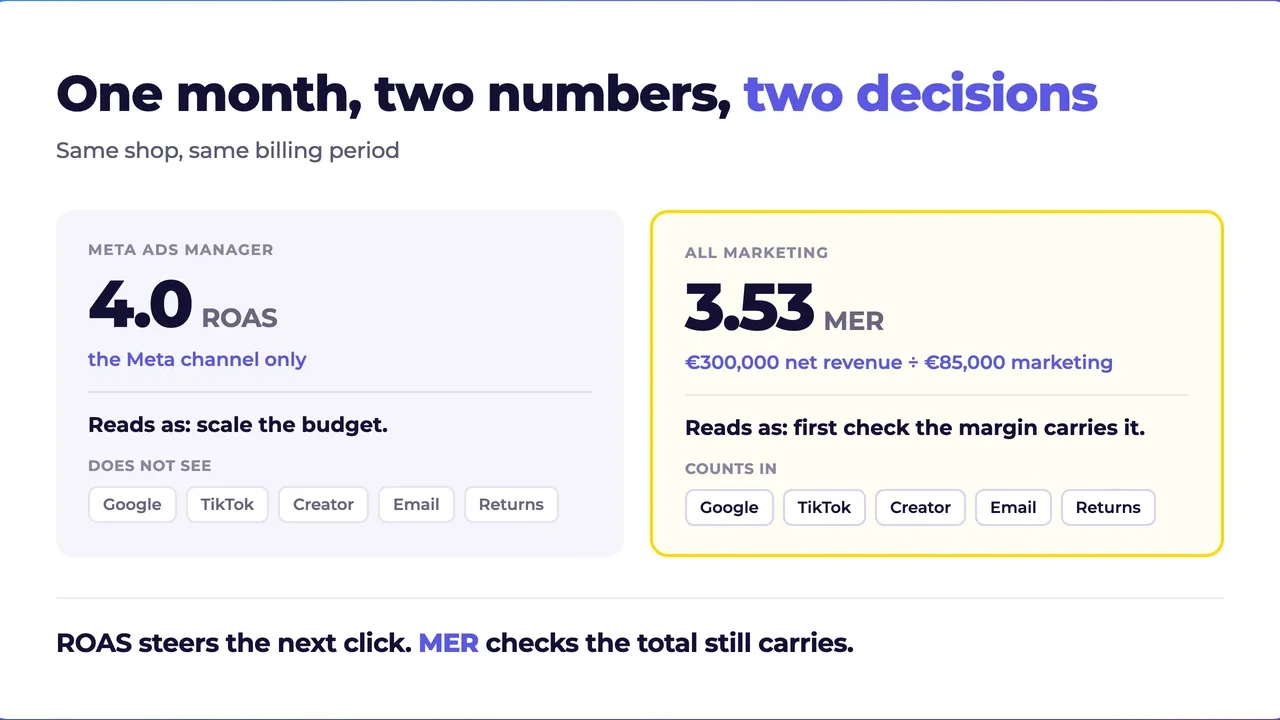
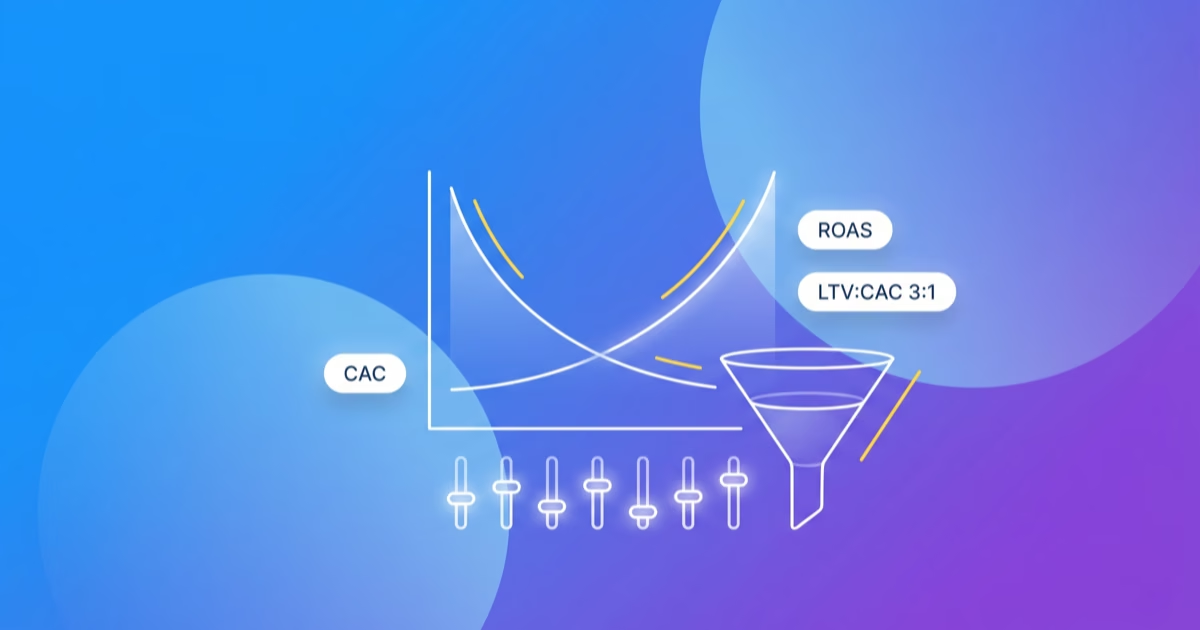
Conversion rate shows the transition to purchase. Customer lifetime value and customer acquisition cost put value and acquisition costs in context. Add the cost and margin basis. CTR and CPC remain useful for diagnosing the earlier steps.
2. Your funnel ends in nowhere
Check whether the page makes the next action clear. Each step should follow logically from the previous one. An unclear transition gives you a specific issue to investigate.
3. Your offer doesn't convince
Review the offer alongside traffic quality. Does the audience understand the problem, benefit and price? Define the weakness before replacing the whole offer.
How to analyze your funnel properly
Walk through the journey yourself: click the ad, read the page and check the next action. Where do you have to search, and what remains unclear?
Heatmaps and session replays can complement that review. They do not establish a cause alone. Use the following metrics to assess the economic result:
- Conversion rate: how many visitors actually buy?
- Lifetime value: how much is a customer worth over time?
- Acquisition cost: how much do you spend per customer?
Read these figures with your cost and margin basis. Use the result to choose a specific change, then assess it on the same basis.
Conclusion
More leads do not automatically mean more customers. Check how many genuine enquiries become sales and what those customers contribute after costs. Then decide whether to change the ad, landing page, offer or budget.
What we look at first
It usually sits between the click and the purchase. We check tracking, offer and landing page together, as a Meta ads agency and when building the landing pages.
Whether your numbers hold up at all is answered in 5 reasons your tracking misleads you.









Klären wir deinen nächsten Schritt zusammen
Let’s work out your next step together